Tech historians may look back on 2025 as a kind of trough in consumer robotics.
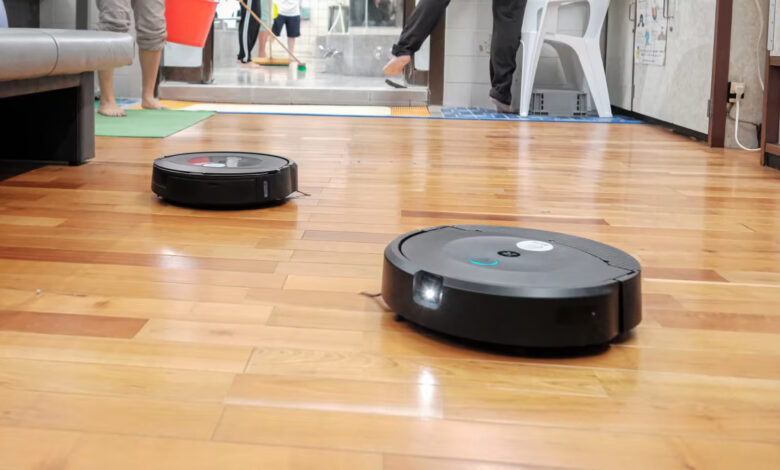
Two decades ago, Roombas blew everyone’s mind. The company that made them, iRobot, was so flush by 2015 it started its own venture capital arm. But after years of struggling to compete against cheaper competitors from China and a failed acquisition effort by Amazon in 2024, iRobot has been spinning out.
It filed for bankruptcy protection on Sunday, announcing plans to be acquired by a Chinese supplier. (Fans, fear not: The company said it plans to continue operating without disruption to app functionality or product support. So your Roomba should, for now, keep making its little circuitous cleaning routes, occasionally getting itself stuck under the coffee table and reliably scaring the crap out the dog.)
Meanwhile, Tesla (TSLA) shares hit a record high Tuesday, largely driven by CEO Elon Musk’s promise that the electric car company is making progress on its transition into an AI and robotics shop.
Wall Street got especially fired up about Musk’s tweet over the weekend saying the company is testing actual driverless Robotaxi rides in Austin, Texas, six months after launching limited services with safety drivers in the car. Investors have been equally or even more optimistic about Optimus, Tesla’s humanoid machine, despite the product’s repeated (literal) stumbles (more on that in a moment).
So here we are: Roomba, the tech that put consumer robots on the map, now feels relatively ho-hum — one brand among many automated vacuums on the market — while the dream of an Optimus-esque bot to handle all of our domestic drudgery remains, for now, more Musk-ian fantasy than reality.
Will all the money going into Tesla usher in a future where we, in 2035, look back at today and wonder how on earth we managed to clean our homes without robot helpers?
While there’s literally no one on the planet who’d be happier to welcome her own personal Rosey from the Jetsons, I’m not holding my breath for Musk’s mechanical monster. Neither, for that matter, is the co-creator of the Roomba, Rodney Brooks, whom the New York Times called the “godfather of modern robotics.”
ICYMI: Earlier this month, an Optimus demo in Miami, titled “Autonomy Visualized,” went viral for all the wrong reasons. In widely circulated video, an Optimus model is seen knocking over a bunch of water bottles before raising its hands to its head and tumbling backward. To many, the motion closely resembled that of a human taking off a VR headset — which is, incidentally, how Tesla has controlled its dancing, bartending robots at previous events, at times without disclosing the tele-operation detail to the human attendees.
Tesla didn’t respond to CNN’s request to comment.
Musk in September declared on X that Optimus would eventually account for “~80 percent of Tesla’s value.” When? And how? He didn’t say. He also said in November that Optimus “will actually eliminate poverty.” (Again, he glossed over the “how” of it all, perhaps distracted by the crowd of shareholders who’d just approved his $ trillion pay package chanting “Elon, Elon!” according to Business Insider.)
In fairness, since Roomba swirled into the picture, the home robotics game has been one of more losses than wins. Amazon’s $1,500 Astro device — essentially a smart speaker on wheels — was a dud for the ages. Neo, the humanoid robot from 1X, costs $20,000 for early adopters, isn’t allowed to operate around kids or pets and may require a human being to remote control it while it’s in your home.
For Brooks, however, the whole concept of a bipedal humanoid helper is “pure fantasy thinking” that investors are wasting their money on. For starters, he argues, scientists are nowhere near being able to replicate the massively complex processes underlying human touch and dexterity. Humanoid robots are also, understandably, an unavoidable falling-over-and-breaking-stuff hazard.
“No human-like robot hands have demonstrated much in the way of dexterity, in any general sense,” he argued in a September blog post. And this week, he told the Times: “I’m very convinced that humanoid robots are not going to have human-level manipulation.”
That argument doesn’t seem to be keeping any Tesla bulls up at night. The company’s stock, after a bumpy spring and summer, is up nearly 30 percent this year.
Once again, some investors have decided it doesn’t matter whether the hype is real — just that it can be sustained. I for one am sitting out the Optimus hype and holding onto my Roomba, which, one day, I’ll pull out of a dusty box to show my grandkids how awesome technology seemed for one brief, shining moment.