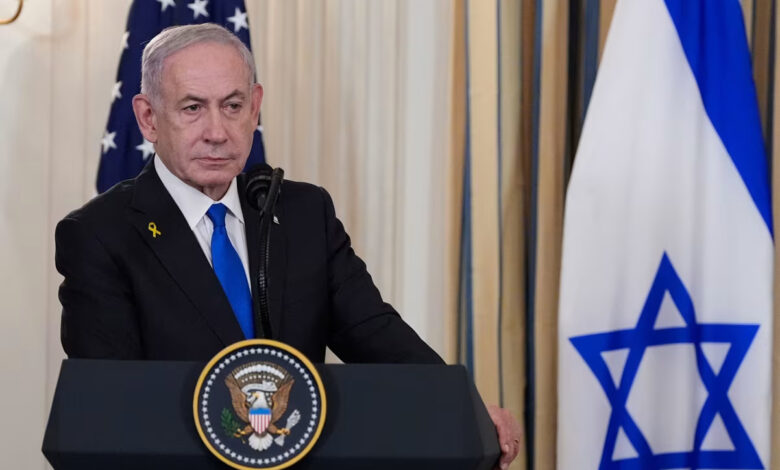
Israeli Prime Minister Benjamin Netanyahu on Friday officially announced the recognition of the self-proclaimed Republic of Somaliland, a region in the Horn of Africa.
The two sides also signed an agreement to establish full diplomatic relations, including the appointment of ambassadors and the opening of embassies in each other’s capitals.
Experts warn that the recognition sets a dangerous precedent and lacks international legitimacy.
Pressuring Egypt
African affairs expert Attia Essawy, said that Israel’s recognition of Somaliland as an independent state sets a a dangerous precedent.
He interpreted the recognition as an attempt at pressuring Egypt through neighboring countries and softening its stance on Gaza.
Essawy explained that the danger lies in the fact that this region largely controls the entrance to the Red Sea, and therefore Israel considers it a means of exerting pressure on Egypt, as part of what he called a “silent diplomatic war” between Egypt and Israel over the Gaza Strip.
He noted that Somaliland is part of Somalia, a country of vital importance to Egypt, primarily due to its geographical location and because it is an Arab state with which Egypt has a cooperation agreement.
Essawy explained that Israel also wants to support Ethiopia in its efforts to gain recognition for Somaliland as an independent state, in exchange for a seaport and a military base in this strategically important region on the Indian Ocean and at the entrance to the Red Sea.
A threat to international peace
A professor of political science and an expert on African affairs, Najlaa Marai, said that Israel’s recognition of a region not officially recognized as a state would threaten international peace and security, the established principles of international law, and the UN Charter.
This region is one of the most sensitive and complex in the world in terms of geopolitical interests and existing conflicts, she warned, amidst international and regional competition.
She noted that Israel’s recognition cannot be separated from the transformations taking place in relations between Ethiopia and both Somalia, Somaliland, and Egypt, or from the efforts of regional and international powers to redraw the map of influence in the Red Sea once again.
The war in Gaza and the Grand Ethiopian Renaissance Dam (GERD) are both issues that are redrawing the map of regional alliances, she said.
The professor highlighted Israeli-Ethiopian relations, which represent a model of Israel’s “Periphery Alliance” strategy that focuses on building relations with Ethiopia, Turkey, and Iran in opposition to the Arab states.
Marai explained that Ethiopian-Israeli relations are gaining increasing importance in light of the war in Gaza and its repercussions on Red Sea security, as well as the GERD issue, which poses a water and security challenge to Egypt and Sudan.
She considered Ethiopia to have become a pivotal African partner for Israel due to its position and influence within the African Union and the Nile Basin.
Marai noted the strategic cooperation between Ethiopia and Israel in the Red Sea, which Egypt has objected to.
Israel is trying to strengthen its position as a security force that can be relied upon by African regimes by presenting itself as a reliable partner in the war on terror and as a partner in Red Sea security, she explained.
Edited translation from Al-Masry Al-Youm