On Friday, President Donald Trump said he was considering “winding down” his war with Iran. But a day later, he threatened to “obliterate” the country’s power plants in an escalation that could further tip the conflict out of control.
Erratic messaging on a war entering its fourth week is becoming a pattern.
Trump previously demanded allies send ships to reopen the Strait of Hormuz — a vital oil export choke point. When they demurred, he said he didn’t want help and branded them cowards for not joining a war they opposed. And before he demanded that Iran reopen the strait within 48 hours or face an onslaught on its power plants, he insisted that at some point it would “open itself.”
The whiplash underscores the vital importance of the strait and the impact of a closure that has stranded scores of oil tankers, created an energy price crisis and threatened to nudge the global economy into a recession that could harm millions of people.
But Trump has reached a moment when rhetorical confusion and contradictory threats cannot obscure the consequences of his choices. He may be about to test whether escalating the conflict can somehow point to a way out or will worsen the economic and political consequences he’s already struggling to control.
In the immediate term, the president has drawn a huge new red line for himself, with no sign that Iran will relent by his deadline on its threat to target ships transiting the strait — its premier point of leverage in the conflict.

If the president orders an attack on the plants, he is likely to trigger the most intense Iranian reprisals yet, which could pulverize global oil markets. If he fails to act and the strait remains closed, he will allow Iran’s leaders to demonstrate they can defy US and Israeli military might despite being seriously outgunned.
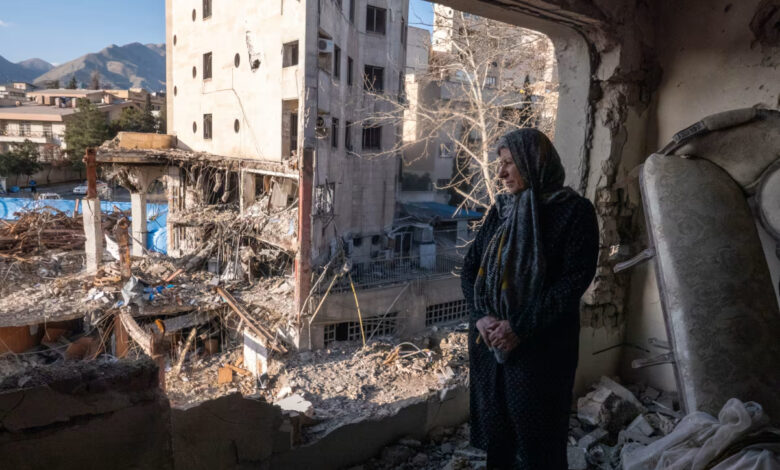
Attacking power plants might build fresh pressure on Iran’s revolutionary armed forces, which control much of the civilian infrastructure. But it would also risk setting off a humanitarian crisis in a country already facing deep deprivation. Hospitals, water and sanitation require reliable power.
In a broader sense, Trump’s new dilemma is fueling concern and criticism that he lacks a strategy or an endgame for a war that he launched without consulting Congress or selling the American people on its costs.
“They have got no vision, no plan, no exit strategy. They clearly didn’t anticipate some of the things that have happened, including the closure of the Strait of Hormuz,” House Democratic Minority Leader Hakeem Jeffries said on CNN’s “State of the Union” Sunday.
Trump is not ‘messing around’
Another escalation would almost certainly worsen the global blowback of a domestically unpopular conflict. While the war may count as a strategic win for the US and Israel, given the destruction wrought by weeks of missile and air attacks, the two allies risk losing the political and economic dimension of the conflict.
“The president is not messing around,” Mike Waltz, the US ambassador to the United Nations, said Sunday on Fox News.
“Unlike his predecessors, he stands by his red lines, and he’s not going to allow this genocidal regime to hold the world’s energy supplies or economies hostage.”
Treasury Secretary Scott Bessent, meanwhile, said on NBC’s “Meet the Press” that “sometimes you have to escalate to de-escalate.” His comment struck chilling parallels with modern US conflicts, from Vietnam to Iraq, that started small but degenerated into vast and losing wars of attrition.
The administration’s rhetoric of expansion also offered a political opening to Democrats on a day when a CBS News/YouGov poll showed that nearly six in 10 Americans believe the war is going badly.
“This administration has totally lost touch with reality,” Democratic Sen. Chris Murphy of Connecticut told NBC. “This war is spinning out of control. Prices are spiking for millions of Americans. … There’s no end in sight.”
Still, advocates of the administration’s strategy insist that the air assault has weakened Iran’s military threat and that Israel’s attacks on leadership — including the assassination of Supreme Leader Ali Khamenei — will soon begin to tell.
“The more that goes on, that’s another symbol of the (fragility of) the government and their strategy to outlast Trump, which I don’t think is going to happen,” US Navy retired Vice Adm. Robert Harward told CNN’s Anderson Cooper on Friday.
Some analysts believe Trump may try to break Iranian resistance with an assault on Iran’s oil exporting epicenter on Kharg Island or by seeking to flush out missiles and drone sites along the Strait of Hormuz. But such operations might require the use of ground troops, in a gamble even greater than Trump’s threatened assaults on Iranian power plants.

And so far, there’s no sign that the regime is cracking. Iran showed it still retains lethal capacity this weekend when a missile slammed into a building in the Israeli city of Arad, injuring at least 84 people. It also launched intermediate-range ballistic missiles at the jointly operated US-UK base at Diego Garcia in the Indian Ocean. Neither projectile hit the target, but the 2000-mile flight path suggested bases and ships the US believed to be out of range could be vulnerable.
These signs of continuing capability make Trump’s decision over his threat to strike power plants even more profound. Iran’s military on Sunday warned that it would close the Strait of Hormuz indefinitely and hit energy and communications infrastructure in Israel and in nations that host US bases. The rising tensions sent the price of Brent Crude, the global benchmark for oil, up 1.69% to $114.09 a barrel. That will further strain American consumers, who are already facing higher prices for gasoline at the pump.
‘Only bad options’
Trump’s next moves will be critical. He could follow through on his ultimatum but end up expanding the war. He could seek a deal with Iran, but its already radical regime has been further radicalized by the war.
“We are approaching a decision point. And for the US unfortunately, we don’t have good options, only bad options,” Danny Citrinowicz, the former head of the Iran branch of Israeli military intelligence, told CNN’s Fareed Zakaria on Sunday.
Trump faces a narrowing equation. He may need to escalate the war to preserve his credibility and to grapple for a way out. But doing so would intensify an increasingly intractable conflict he claims to have already won.