An unprecedented wave of bite-sized digital storytelling is sweeping the global media market, opening high-yield investment opportunities that are forcing traditional entertainment models to evolve.
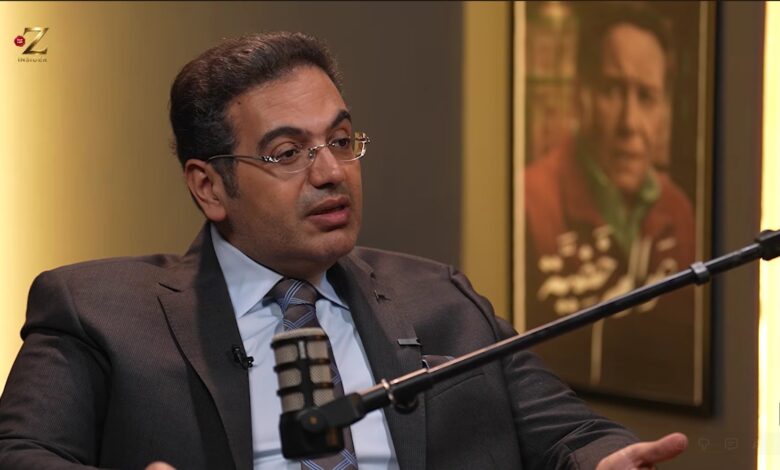
Producer Hesham Tahssin asserted that the micro-drama industry represents the single largest new investment frontier in the global entertainment sector.
He projects that this booming market will nearly double in size over the next few years to reach approximately $20 billion, building on its explosive global valuation of $11 billion in 2025.
During his appearance on the Zinsider podcast series, “I Am the Producer,” Tahssin shared an ambitious vision for the future of Arabic entertainment, declaring that micro-drama is set to become the next “tycoon”—a disruptive force poised to fundamentally redraw the map of global content creation.
“This market has grown by a staggering 115 percent in just a single year. We are not looking at a passing fad, but a powerhouse industry establishing its dominance worldwide—and it will inevitably take the Arab region by storm.”
Inside the micro-drama economic model
Tahssin broke down the highly lucrative, low-risk economic framework that makes short-form mobile drama incredibly attractive to investors and creators:
Format: A typical series spans 50 to 90 ultra-short episodes, with each episode running under three minutes.
He explained that the global micro-drama market is already nearly double the size of the global free-to-air (FTA) television advertising market, which hovers between $5.5 billion and six billion dollars.
According to Tahssin, these striking figures should compel traditional drama producers to urgently rethink their legacy production models.
A global phenomenon with a gaming-style revenue model
While the micro-drama phenomenon originated in China—where the domestic market alone commands a massive $6.9 billion share—it has rapidly expanded across Latin America, the US, and Europe, alongside exponential growth in Turkey.
To monetize this massive audience, short-form platforms utilize a business model heavily inspired by the mobile gaming industry:
- The freemium hook: Viewers watch the first few episodes entirely for free.
- Ad-supported unlocks: Users can watch short advertisements to earn reward points used to unlock subsequent episodes.
- Microtransactions: Viewers can pay tiny increments—often as low as 10 cents per episode—to keep watching.
- Premium subscriptions: Users can opt for flat-rate monthly subscriptions for unlimited access to the entire catalog.
Exporting Arabic drama to the world
Revealing a major business development for the first time, Tahssin disclosed that his production company is currently in advanced negotiations to forge strategic partnerships with leading global micro-drama platforms.
He highlighted two major strategic advantages of these upcoming alliances:
- Global footprint: Directly entering a highly successful, pre-established international market.
- Exporting Arab talent: Seamlessly distributing premium Arabic content produced in Egypt, Saudi Arabia, and the UAE to platforms boasting millions of active global subscribers.
Tahssin emphasized that rapid advancements in localization, AI-dubbing, and subtitling technologies have made globalizing Arabic content easier than ever before.
He urged Arab creators and investors to act immediately.
“The window of opportunity is right now. We must establish our foothold in this rapidly growing market before global platforms become saturated with international competitors. Those who move early will capture the lion’s share of this highly promising industry,” he concluded.