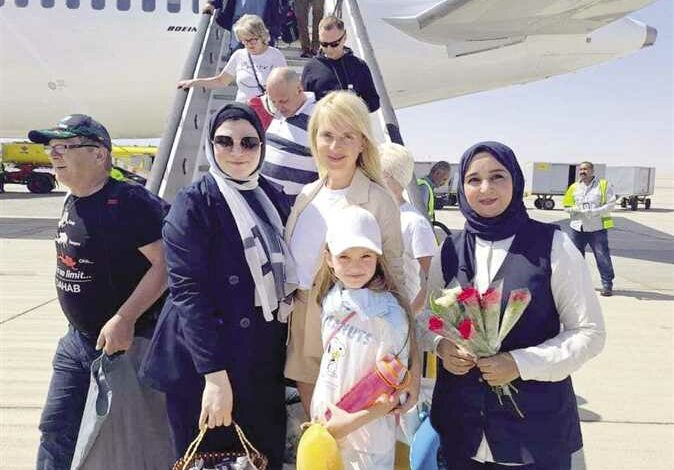
For the third consecutive month, Hurghada has raised the “Fully Booked” sign, as hotels and resorts continue to record occupancy rates nearing 100 percent – reflecting a strong demand for the city during the current summer season.
Accommodation prices at several luxury hotels and resorts have risen to record levels, amid calls for expanding hotel capacity to keep pace with the increasing growth in domestic and international tourism.
The high occupancy rates this season are no longer just a passing seasonal peak, as the boom has extended for the third month, driven by the convergence of several factors.
Among these factors are early foreign bookings made by tour operators, a noticeable increase in the number of Egyptians heading to Hurghada for their summer vacations, and the return of large numbers of Egyptians working abroad to spend holidays with their families.
Strong demand
The manager of a tourist village, Mohamed Ali, said that market indicators confirm continued strong demand for Hurghada.
He explained that hotel rooms overlooking the sea were the most popular for bookings, especially within resorts offering all-inclusive packages.
This high demand, compared to available hotel capacity, has driven up prices.
Ali added that the majority of European bookings were made several months ago through tour operators, while recent weeks have seen a significant increase in Egyptian bookings, leading to increased pressure on available rooms, particularly in top-tier hotels and luxury resorts.
He pointed out that the German, Russian, Swiss, Czech, British, and Eastern European markets remain among the most prominent sources of tourists to Hurghada, coinciding with the continued strong recovery of the Russian market.
This has helped maintain high occupancy rates throughout the peak summer season.
One of the best seasons yet
The director at hotel management in a major tourism company, Hamada Mahmoud, confirmed that the current season is one of the strongest Hurghada has witnessed in recent years.
He noted that the continued rise in occupancy rates is no longer linked to a single tourist market, but rather a result of the diversification of sources of inbound tourism to the city.
Mahmoud added that the current boom is the result of years of development in airports, roads, and infrastructure, along with an improved image of Egypt as a tourist destination in international markets.
This has led to increased demand and higher occupancy rates in hotels and resorts.
Edited translation from Al-Masry Al-Youm