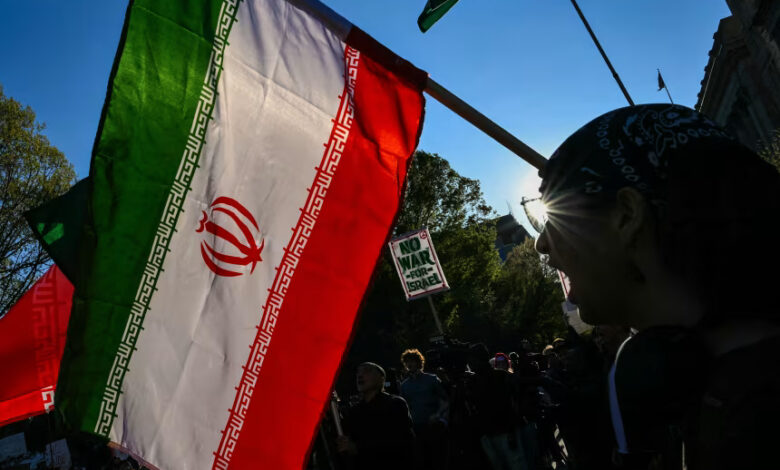
Iran and the United States traded attacks for the first time in over a month overnight into Monday, in an exchange that risks reigniting the damaging conflict after weeks of relative military calm.
Iran fired missiles toward US military targets in Jordan in retaliation for a strike on Iranian rocket launchers that the US said were trying to launch sea mines into the Strait of Hormuz –– the key shipping route that’s become the center of regional tensions and diplomatic efforts.
Later Monday morning, the United Arab Emirates said it had intercepted a drone approaching from Iran over its territorial waters.
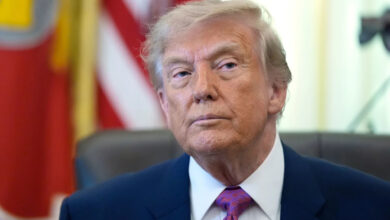
The exchange of strikes came just days after President Donald Trump declared the Strait of Hormuz free from mines, and is a break with Washington’s recent shift in focus to maximizing economic pressure on Iran rather than military actions.
Six months into the festering conflict, the US and Iran have been locked in battle over control of the waterway, critical to global energy supplies, with Tehran asserting its claimed right to manage it with regular strikes on vessels, and the US determined to keep traffic flowing by guiding ships and a military blockade of Iranian ports.
The US strike on Sunday targeted two Iranian rocket launchers on Iran’s Larak Island, where it observed Iranian forces preparing to launch rockets with mines into the strait, said Capt. Tim Hawkins, spokesperson for US Central Command (CENTCOM).
The military took “limited, precise action” against Iran’s “minelaying forces posing an imminent threat” in the critical waterway, CENTCOM later said in a post on X.
“Iran created the threat and the US military eliminated it to protect civilian mariners, commercial shipping, and the free flow of global commerce.”
Residents reported hearing an explosion near the island, a small landmass off the coast of Bandar Abbas in southern Iran, according to state media, which reported casualties of Iranian forces and civilians.
“We are not seeking war… But in the face of aggression, we will never sit idly by, and we are capable of delivering a decisive response.” said Iran’s President Masoud Pezeshkian on Monday, state broadcaster IRIB reported.
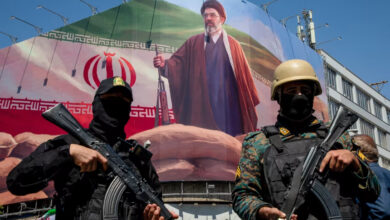
The country’s powerful Revolutionary Guards (IRGC) called the US strike “a strategic and deadly mistake” by the Trump administration and vowed retaliation, according to a statement carried by state broadcaster IRIB.
By Monday morning, Iran had claimed to have targeted bases used by the US military in both Jordan and the UAE.
Jordan’s armed forces said Monday that air defense systems intercepted and destroyed eight missiles that entered the kingdom’s airspace. The military said the projectiles were neutralized before they could pose any threat to civilians or property.
The UAE’s interception of a drone followed earlier claims in Iranian state media that Iran’s army had targeted a US base there.
CENTCOM completed clearing sea mines from the waterway’s international shipping routes last week, the Trump administration has said. “Iran has been notified that any ship or boat placing new mines will be immediately and systematically destroyed,” Trump said last Tuesday.
“US forces are monitoring the area closely and remain prepared to protect the free flow of commerce through this essential waterway,” a US official said.
When asked for comment on the latest strikes, the White House referred CNN to US Central Command.
Half a year after the war began, talks between the two countries have stalled, with the White House saying Thursday that there are no ongoing negotiations.
But Iran and Oman continue discussions over a proposed arrangement to restore maritime traffic through the strait.
Regional mediators, including Qatar, have backed the talks, while Iranian officials have repeatedly linked the future of navigation through the strait to broader discussions with Washington and regional security developments.
Sunday’s attack marked the first US strikes on Iran since July 29, when the US completed a “heavy wave of strikes” in response to an attempted attack on American military positions the day before.
Trump in recent weeks has focused on increasing economic pain for Iran rather than military actions, claiming last week that the US’ financial strength will move the country “toward a very big victory.” The US Treasury Department has threatened damaging new sanctions on countries that refuse to cut economic ties with Iran, calling it an “economic D-Day.”
US Treasury Secretary Scott Bessent told Reuters on Sunday the department was likely to unveil weekly new secondary economic sanctions on Iran, focusing at first on banks.
“You’re going to see a lot more of these every week,” Bessent said ahead of a Group of 20 finance leaders meeting. “We’re starting with the banks, and we’re telling the banks it’s not okay to have Iranian money and to aid the regime.”
Oil prices jumped Sunday after the US launched the strikes on Iran. Brent crude, the international benchmark, rose 2.8% to $90.57 a barrel, while US crude rose 2.7% to $85.64 a barrel.
This story has been updated with additional information.
CNN’s Nadeen Ebrahim, Aida Karimi, Helen Regan, Piper Hudspeth Blackburn and Auzinea Bacon contributed to this report.