British Prime Minister Keir Starmer announced on Monday that the UK will ban social media for under-16s, claiming that the planned measures will go “further than any country in the world” to protect children from online harms.
What is in the UK ban?
The proposed social media ban will affect “user-to-user platforms, whose purpose is to enable social interaction and which allow users to post material, alongside algorithms,” said the UK government in a statement Monday.
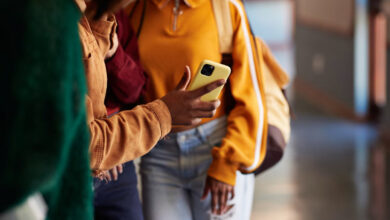
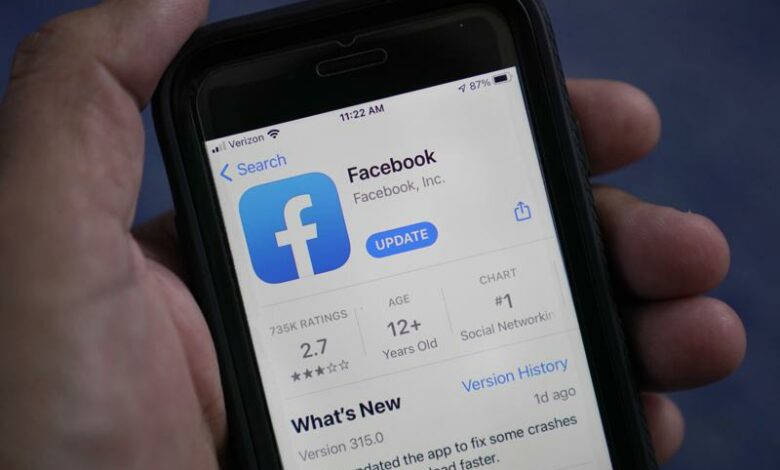
This means children will no longer be allowed to access platforms including Snapchat, TikTok, YouTube, Instagram, Facebook and X. Messaging services such as WhatsApp and Signal will not be affected, added the government.
“The changes will back parents grappling with the risks for children that come from the online world and help empower them by providing a clear decision on what is safe and age-appropriate for children,” said Starmer in the statement.
The government is planning to put the bill to lawmakers before Christmas, “with protections expected to come into force in Spring 2027,” according to the statement.

What other countries have introduced or considered bans?
The UK is the latest in a string of countries that have introduced or are considering restrictions on social media for children.
In February, Spain banned social media for under-16s and introduced rules requiring platforms to employ strict age verification tools, and Malaysia started enforcing its own ban earlier this month.
France, Denmark and Norway have also announced plans to prevent children from accessing social media.
In December, Australia became the first country in the world to implement a social media ban for under-16s, barring access to 10 platforms.
Do these types of bans work?
While Spain’s ban was introduced too recently to produce any meaningful data on its effectiveness, a survey conducted by Australia’s eSafety commissioner shows that many children have found ways to get around the ban.
Based on a survey of 898 parents and carers of children aged 8-15 carried out from January 19 to February 2, around seven in 10 children who had a social media account before the ban came into force on December 10 still had an account.
“While there are fewer under-16s with social media accounts than there were four months ago, it is clear significant numbers of children aged under 16 are still on social media,” Australia’s eSafety commissioner said in a report published in March.
It added that Australian authorities have not fined any tech companies for non-compliance with the new regulations, although Snapchat, TikTok, Facebook, Instagram and YouTube are all currently under investigation.
How is the UK ban different to Australia’s?
The UK is planning to go further than Australia’s ban, with “world-leading blocks on harmful functions such as livestreaming and stranger communication with children for under-16s,” which will also apply to other online services such as gaming sites, added the government.
“Taken together, these measures will mean a much more comprehensive model than just a blanket ban on social media – one that responds to how children experience harm online, rather than just where it happens,” said Starmer in the statement.
UK technology secretary Liz Kendall added that Britain plans to learn from Australia’s experience by “making it far harder for children to bypass safeguards.”
The government will also work with UK communications services regulator Ofcom on an enforcement strategy, Kendall added.
How have children’s charities reacted?
Nine in 10 British parents back the ban, according to the UK government, and children’s charities have also welcomed the move.
At the same time, Lynn Perry, chief executive of Barnardo’s, warned that a ban “is not a silver bullet.”
“It is as important as ever that social media companies take responsibility for making their platforms safe and the government and regulators robustly hold them to account. It is not, and has never been, children’s job to keep themselves safe,” she said in a statement Monday.
Chris Sherwood, CEO at the National Society for the Prevention of Cruelty to Children (NSPCC), called the move “a watershed moment for child protection” while highlighting the need for effective enforcement.
“The Government must continue to put pressure on Big Tech and not let them off the hook,” said Sherwood in a statement Monday.
“We want to see Government go further, be bolder and make sure there is real accountability across all online platforms, gaming services, and AI chatbots so the transformational change children and parents need and deserve becomes a reality,” he added.
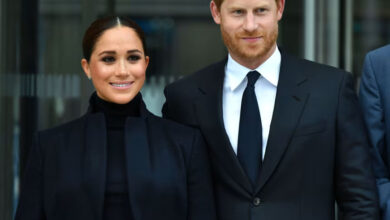
Advocates of the ban included Prince Harry and Meghan, Duke and Duchess of Sussex, who welcomed the government’s announcement in a statement. “Lasting change requires safer platforms by design, meaningful accountability, and a commitment to putting children’s wellbeing ahead of engagement and profit,” the statement said.
Have social media companies responded?
A spokesperson for Meta, the parent company of social media networks Facebook and Instagram, told CNN that the firm is working to keep children safe online and has implemented features that limit who can contact them, as well as the content they see.
But bans won’t help to keep children safe, added the spokesperson.
“As we’ve seen in Australia, bans risk isolating teens from online communities and information, and driving them to unregulated alternatives that lack built-in protections and parental controls,” they said.
“To be both effective and easy for parents, any restrictions must be underpinned by an age verification system on devices so people aren’t asked to hand over ID to dozens of individual services to prove their age,” added the Meta spokesperson.
A spokesperson for the Snap Company, which owns Snapchat, said that it supports government efforts to protect people online.
“However, because the majority of time spent on Snapchat is in private messaging between friends and family, an outright ban that disconnects teens from those relationships doesn’t make them safer – it may simply push them to less safe platforms,” they said.
“It is vital that the Government now carefully considers the scope of a ban, and how it will define and apply its exclusions,” added the spokesperson.
CNN has contacted X, Google and TikTok for comment.