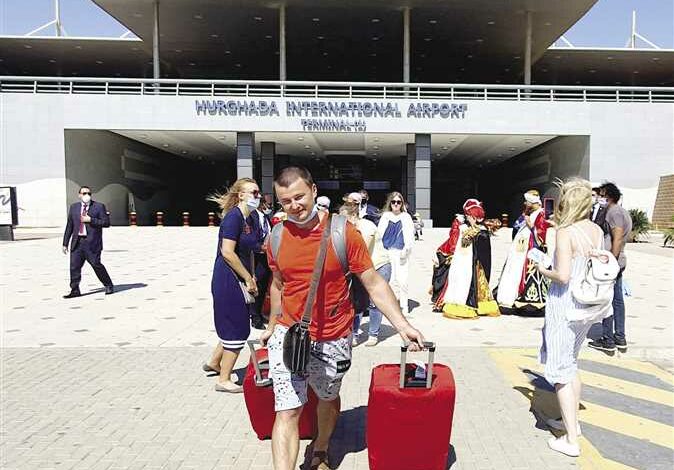
As the conflict in Iran radically reconfigures regional security, the US Department of State has designated Egypt as a notable zone of relative stability.
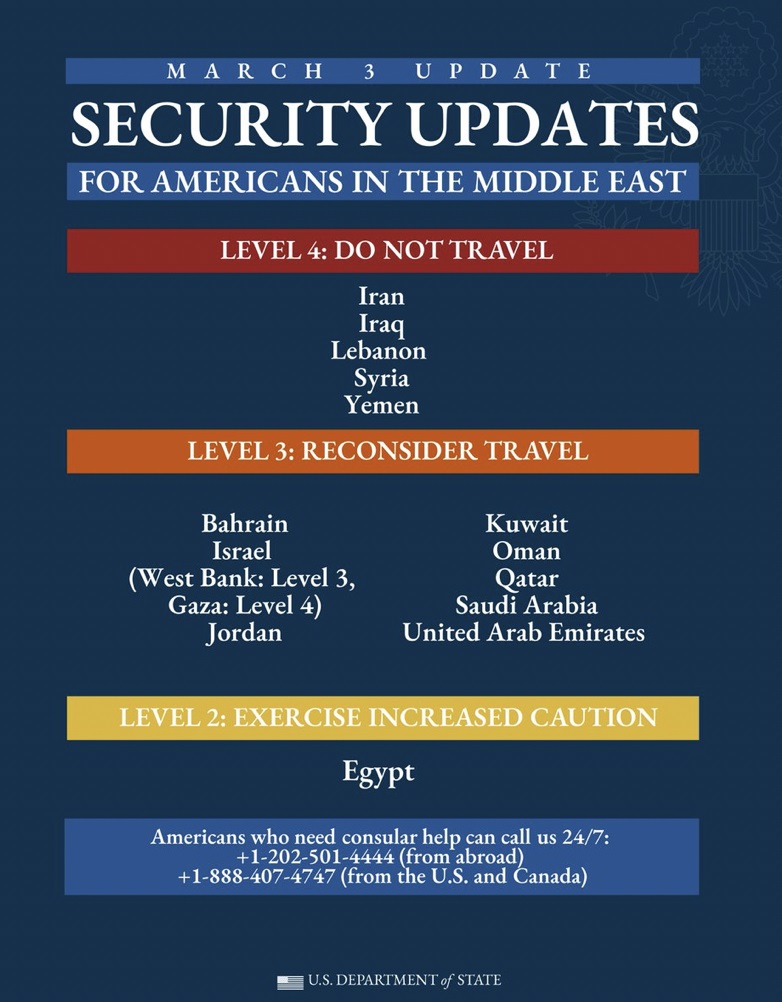
In a comprehensive travel advisory update issued late Tuesday, Washington maintained Egypt’s “Level II: Exercise Increased Caution” status, distinguishing it from the 14 neighboring nations now facing severe “No Travel” or “Reconsider Travel” mandates.
Stability exception
While much of the Middle East has been engulfed by the logistical and security fallout of the recent military campaign against Iran, the State Department’s latest assessment indicates that Egypt’s general security profile remains unchanged.
Though travelers are still advised to remain vigilant—consistent with the standard Level II rating—Egypt remains the only nation in the immediate conflict-adjacent region not to be downgraded to more restrictive categories.
Regional red zone
The travel advisory update paints a stark picture of the surrounding region.
The State Department has elevated five nations—Iran, Iraq, Lebanon, Syria, and Yemen—to “Level IV: Do Not Travel,” essentially ordering an immediate halt to all American civilian movement within their borders.
Gulf and levant downgrades
The widening scope of the crisis has caused several major hubs to be relegated to “Level III: Reconsider Travel.”
This orange-coded alert now covers the UAE, Saudi Arabia, Qatar, Kuwait, Oman, Bahrain, Jordan, and Israel.
The West Bank has similarly been placed under Level III, while the Gaza Strip remains at a permanent Level IV.
Egypt stands as a vital regional gateway
The decision to keep Egypt at Level II reinforces its role as a vital regional gateway.
As aviation hubs in the Gulf face disruptions, Egypt’s continued status as a relatively secure environment is expected to solidify its position as the primary transit point for international personnel and regional logistics during the ongoing hostilities.