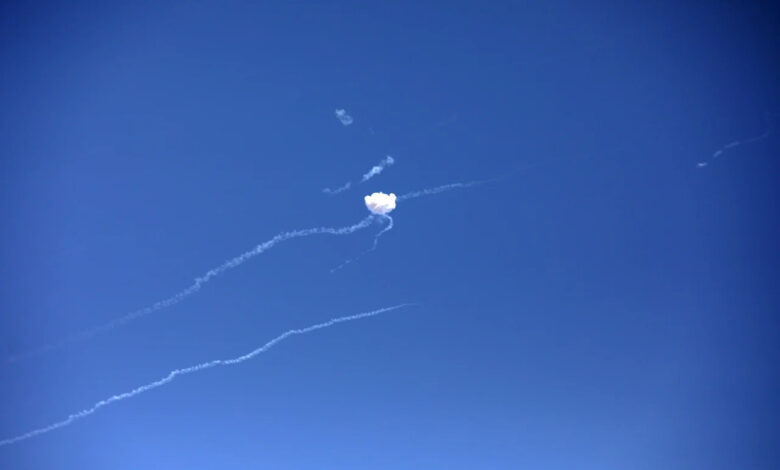
By now the pattern is familiar. An Iranian drone strikes a ship transiting the Strait of Hormuz without Tehran’s consent. The United States responds with air strikes against targets on the Iranian coast. Iran’s Islamic Revolutionary Guard Corps retaliates with missile and drone attacks on the US’ Gulf allies, claiming it is targeting American military facilities.
This sequence occurs even as Qatari and Pakistani mediators try to keep the diplomatic track alive. Qatar was targeted in the latest Iranian barrage. So was Oman, which on Saturday hosted Iranian Foreign Minister Abbas Araghchi for talks on navigation through the strait.
Hormuz offers Iran critical leverage. So long as it can limit passage through the strait, either through force or the threat of force, it can have an impact on global energy flows.
“This strategic waterway is one of the country’s deterrent assets,” said Mohsen Rezaei, military adviser to Iran’s Supreme Leader Mojtaba Khamenei, on Sunday.
Senior US officials said that Iranian negotiators had blamed an “errant part” of Iran’s system for attacks on three ships last week.
That “allows the regime to sustain talks and attempt to reap potential economic benefits while the IRGC continues to enforce Iran’s control over the strait,” the Washington-based Institute for the Study of War (ISW) said Saturday.
But “the differences between the negotiators and the IRGC are one of immediate tactical means – negotiations or military action – not strategic ends,” ISW added.
The US demands Iran publicly acknowledge that the strait is open to all commercial traffic and end attacks on vessels. Tehran has rejected any return to the pre-war situation, when there was unfettered freedom of navigation.
Squaring that circle seems beyond either side at present.
“US operations seem focused on imposing costs on Iran rather than fundamentally changing the strategic reality in the strait,” wrote Israeli analyst Danny Citrinowicz Sunday.
It’s difficult to see maritime traffic returning to normal unless “either Iran and Oman reach an arrangement that reduces tensions over navigation, or the United States abandons its effort to route tankers through the southern channel over Iran’s objections,” Citrinowicz said on X.