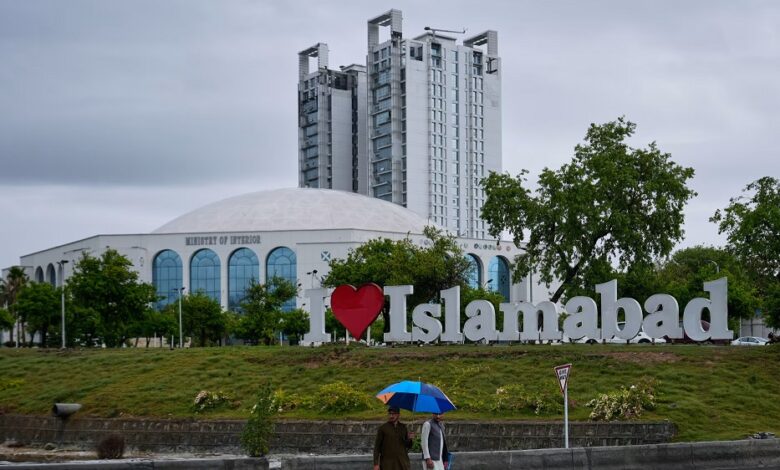
The streets of Islamabad have been emptied by a sudden two-day public holiday, declared to enforce a strict security lockdown in the Pakistani capital.
Behind the barricades, diplomatic activity is operating at a fever pitch as the world holds its breath for this weekend’s make-or-break ceasefire talks between the United States and Iran.
Pakistan, a nation more frequently making international headlines for its heightened militancy and shaky economy, is hosting the first direct talks between Washington and Tehran, working to end a weeks-long war that has left thousands dead and sent shockwaves across the globe.
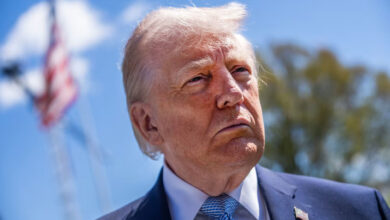
It is a stunning pivot for a country historically viewed through the lens of deep security concerns. The breakthrough underscores just how much Islamabad’s relationship with the White House has evolved since President Donald Trump’s first term, when he accused Pakistan of giving Washington “nothing but lies and deceit.”
Vice President JD Vance along with Trump’s special envoy Steve Witkoff and son-in-law Jared Kushner are expected to attend this weekend’s talks, with Vance the most senior US official to visit Pakistan since 2011.
Analysts attribute this transformation to a combination of geographic necessity, deft diplomacy, and shifting regional alliances. Together, these factors have transformed Pakistan into an indispensable mediator, elevating the country’s profile on the global stage.
“The fact that Pakistan was able to pull this diplomatic breakthrough at the last minute definitely earns it a lot of credibility,” said Farwa Aamer, director of South Asia Initiatives at the Asia Policy Institute.
“Pakistan’s proactive facilitation efforts and success puts it on the map as a player who is showing agency,” Aamer said, establishing Islamabad as “an active stakeholder in how the future of the broader region will look like.”

From suspicion to trust
Until last year, Pakistan was widely considered an unreliable US partner, one that offered support to Washington during the war in Afghanistan while allegedly backing the Taliban at the same time.
The killing by US Special Forces in 2011 of Osama Bin Laden, who was discovered hiding about one mile from the Pakistan Military Academy in Abbottabad hugely embarrassed Pakistan’s military. It also sparked significant criticism among many US politicians over Washington’s military support for Islamabad, including from Trump who frequently accused Pakistan’s military of sheltering the Al Qaeda leader.
Trump’s predecessor Joe Biden never called either of the two Pakistani prime ministers who served during his term.
“Pakistan was really a sort of pariah state,” said political scientist Aqil Shah, from the Edmund A. Walsh School of Foreign Service at Georgetown University. “The Biden administration didn’t really engage it; there was no concrete strategic interest.”
But Trump 2.0 has shaken the mixer of US diplomacy, upending friendships and bringing foes into the fold of his presidency – if they have something to offer.
Pakistan’s claims it is sitting on trillions of dollars’ worth of rare earths and critical minerals has sparked interest in Washington. And, following a brief conflict with arch-rival India last year, Islamabad moved quickly to publicly praise Trump for his efforts to halt to the fighting.
“I think there was a very real desire in Pakistan to try and broaden the relationship with Washington,” said Fahd Humayun, an assistant professor of political science at Tufts University. “Pakistan came out of (the conflict with India) slightly more restrained because it very publicly acknowledged it was in favor of deescalation, and acknowledged the Trump administration’s role in doing that.”
Since then, Pakistani officials have secured deals on rare earths, nominated the US President for a Nobel Peace Prize, and joined Trump’s Board of Peace.
Trump even referred to Pakistan’s powerful military chief, Asim Munir, as his “favorite field marshal,” and his acknowledgment of the roles played by Islamabad’s top officials during Wednesday’s ceasefire announcement did not go unnoticed.
But Islamabad also has its own reasons for wanting to see an end to the war.
Pakistan has been acutely affected by the energy fallout from Iran’s chokehold on the Strait of Hormuz, as it imports much of its oil and gas from the Middle East. Islamabad also signed a mutual defense agreement with Saudi Arabia last year, and if the war had spiraled out of control, it could have compelled Pakistan to come to Riyadh’s defense.
“I think Pakistan had enormous stakes, probably more stakes than any other country east of Iran in this particular conflict,” Humayun said. “And the other thing to keep in mind is that Pakistan was never really part of the anti-Iranian coalition that had begun to coalesce.”
Delicate neutrality
Pakistan shares a volatile 900-kilometer border with Iran, a region defined by deep-rooted ties between ethnic Baloch populations on either side who have long chafed at being ruled by leaders in Tehran and Islamabad. It is also home to one of the world’s largest populations of Shia Muslims outside of Iran.
Unlike other Islamic countries in the Gulf, Pakistan does not host any US military bases, and has not been targeted by Iranian missiles and drones. Iran also permitted Pakistani vessels to bypass its blockade in the Strait of Hormuz.
“Pakistan found itself in a unique spot with good ties with both Tehran and Washington,” said Aamer from the Asia Society Policy Institute.
This balancing act is further bolstered by Islamabad’s close relations with another global heavyweight: China. This “all-weather” partnership is anchored in their mutual suspicion of India, and the multi-billion dollar China-Pakistan Economic Corridor.
Pakistani Foreign Minister Ishaq Dar visited Beijing last week for talks with its top diplomat Wang Yi, dialogue that appeared to carry significant weight, analysts say.
“I think one thing that probably made an impact was that Pakistan also established a conduit with the with China,” said Humayun, adding the confluence of Pakistan’s back-and-forth and China’s buy-in “must have made a difference for the Iranians.”
Fragile ceasefire

Days ahead of the highly anticipated “Islamabad talks,” security across the Pakistani capital has been significantly tightened.
The government has reserved the Serena Hotel, one of the city’s most ornate properties, known for its carved wooden panels and rose-colored chandeliers. Current guests have been asked to vacate the premises and are being compensated for their relocation.
But even as diplomats and officials work to prepare the ground for talks, the nascent ceasefire is already being tested.
Iran’s Islamic Revolutionary Guard Corps claimed shipping through the critical Strait of Hormuz stopped following what it said was an Israeli ceasefire violation in Lebanon that killed more than 180 people.
Pakistan, which does not recognize the state of Israel, condemned the aggression. “The Israeli actions undermine international efforts to establish peace and stability in the region,” prime minister Shehbaz Sharif said in a statement.
In Islamabad, hotels are fast booking up as journalists scramble to apply for visas to cover the historic talks. Amid the hurry, the stage is being set for a significant shift in Pakistan’s strategic relevance.
“All of these things just align in a way that made it possible for Pakistan to position itself very strategically at this moment,” Humayun said.