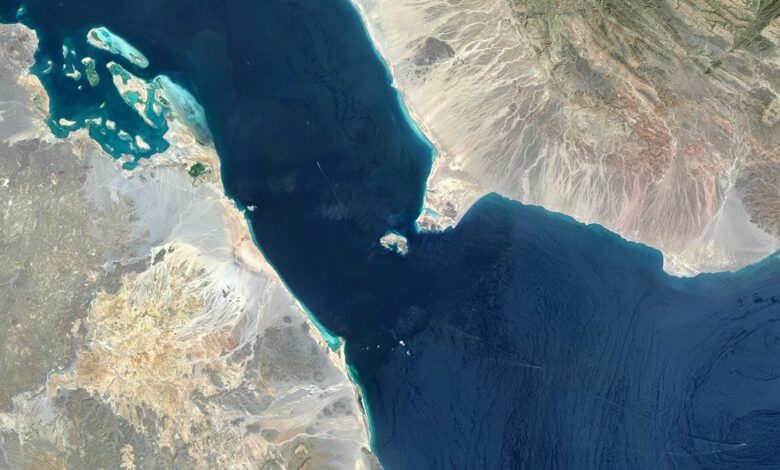
A threat by the Iranian backed Houthis to blockade Saudi-linked shipping in the Bab el-Mandeb Strait has raised the prospect of the Middle East’s two key energy chokepoints coming under pressure at the same time, shipping analytics firm Kpler warned Tuesday.
A “simultaneous and prolonged disruption of Bab el-Mandeb and the Strait of Hormuz could affect maritime routes carrying approximately one-quarter of global oil supply,” the firm said in a written analysis.
The firm said Bab el-Mandeb – which connects the Red Sea to the Gulf of Aden and the Indian Ocean – remains open, but traffic is already running far below pre-crisis levels while conditions in Hormuz have “deteriorated sharply.”
According to Kpler, crossings through Bab el-Mandeb averaged about 41 vessels a day between July 15 and July 20, “43% below the 2023 peak of 72/day.”
Saudi crude loadings through the strait fell 34% in two weeks, dropping from 29.58 million barrels in the week of June 29 to 19.50 million barrels in the week of July 13, the analysis said.
Kpler said the Houthi threat is especially significant because Saudi Arabia has increasingly used the Red Sea route as a fallback for exports after disruption in the Strait of Hormuz.
Kpler examined several possible scenarios, ranging from limited self-diversion by cautious operators to a full blockade. Under “selective targeting,” it said, “compliant commercial traffic could fall 40–50% within weeks, pushing crossings toward 20–25/day.” Under a full blockade, Bab el-Mandeb “could follow Hormuz and fall below 15 vessels/day within days,” the analysis said.
In a separate note published Tuesday, Kpler said two tankers carrying Saudi crude reversed course in the Red Sea after the Houthi declaration.