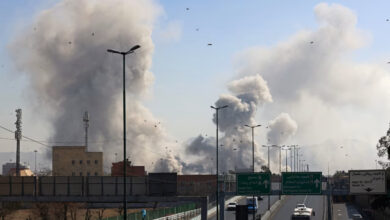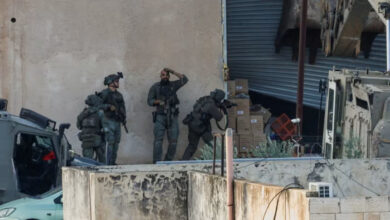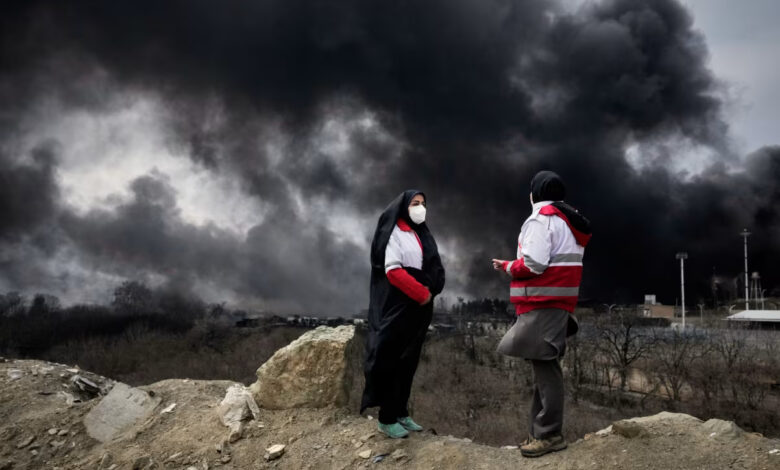
Already the Iran war, now in its fourth week, has seen thousands of people killed and injured, global energy prices skyrocketing, and vast swathes of the turbulent Middle East in the grip of appalling violence.
But Trump’s characteristically blunt ultimatum, delivered on his Truth Social platform at the weekend, that he would “hit and obliterate” Iranian power plants, unless the Islamic Republic relaxes its tight stranglehold around the narrow Strait of Hormuz – largely blocked since US and Israeli attacks on Iran began last month – potentially opens a Pandora’s Box of negative consequences for the region.
A defiant Iran is refusing to comply with Trump’s dramatic 48-hour deadline, set to expire on Monday evening, and is vowing swift retaliation if the US threat is actually carried out, including even greater restrictions on the strategic energy corridor and choke point through which an estimated 20 percent of the world’s oil and gas normally flows.
“The Strait of Hormuz will be completely closed and will remain closed until our damaged power plants are rebuilt,” Iran’s armed forces headquarters said in a statement Sunday, essentially threatening to stem even the trickle of giant oil and gas tankers currently allowed to pass through Hormuz.
Iran is threatening further military escalation too.
“Power plants in regional countries hosting US bases will be considered legitimate targets,” the armed forces’ statement continued.
Critical infrastructure and energy facilities in the Middle East could be “irreversibly destroyed,” Iran’s parliament speaker, Mohammad Baqer Qalibaf, reiterated in comments posted on X.
Regional infrastructure would also become “legitimate targets” should Iran’s facilities be hit, he repeated.

It’s an alarming Iranian message that is being heard loud and clear in the increasingly anxious oil- and gas-producing Arab Gulf states, like Qatar, Saudi Arabia, the United Arab Emirates and Bahrain, which all host US military installations and where the stakes are near existential in economic terms.
Already disruption to the Gulf energy production and export system, including Iranian drone and missile attacks, has seen oil and gas revenues that are usually calculated in the billions of dollars a day drop precipitously, if not to zero, since the Iran war began.
Recent strikes on Qatar’s vast Ras Laffan natural gas processing facility, which was hit by two Iranian missiles last week in retaliation for an Israeli strike on the Iranian South Pars gas field, sent shockwaves through the global energy markets, surging already highly elevated global prices.
There are real concerns Iran could replicate and even multiply that kind of damage and disruption, even with its ever-depleting arsenal of missiles and drones, if the US carries out Trump’s power plant threat.
The US president himself has previously cautioned that smashing key Iranian infrastructure sites would badly impair the country’s post-war ability to quickly rebuild. A widening of the Iran war could also herald more casualties in the region, as well as higher global prices for food and fuel, a prospect that would land hardest on the world’s most vulnerable.
Here in the Gulf, it’s not only uncertainty over the energy markets that is making this unpredictable new chapter in the escalating conflict so painful to watch.
In glitzy Gulf cities like Dubai, Abu Dhabi and Doha, which have spent decades building reputations as safe-haven financial centers, global travel hubs and tourist destinations in their own right, residents and tourists have been fleeing in droves, escaping the drones and missiles to more secure locations.
That exodus, along with the vast economic losses, may yet prove to be just temporary. The nightmare scenario has not yet fully arrived.
But as the region teeters on the brink of a new and dangerous escalation, yet more negative consequences – like the evils that escaped Pandora’s box – could soon be unleashed.