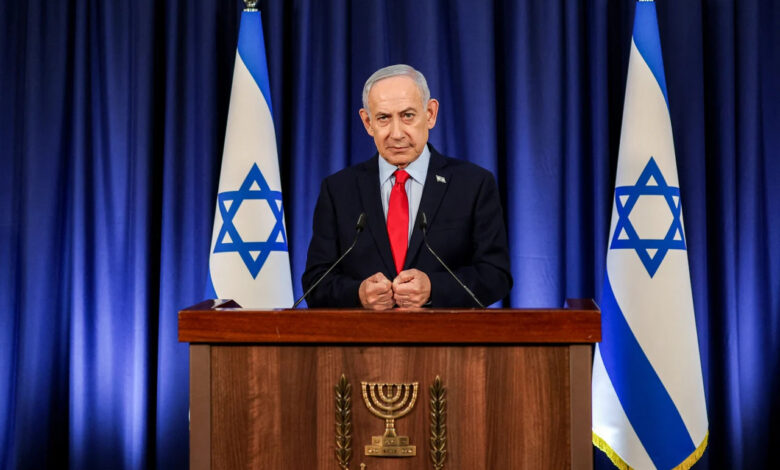
Facing intense pressure at home to act against Hezbollah, Israeli Prime Minister Benjamin Netanyahu on Monday announced plans to strike the group in the Lebanese capital. Hours later, following an intervention by US President Donald Trump, the operation was shelved.
In the morning, Netanyahu said he would not accept a scenario “in which Hezbollah attacks our cities and our citizens, and its terrorist headquarters in Beirut, in Dahiyeh, remains out of bounds.” In the afternoon, the military issued an evacuation warning for Dahiyeh, a Hezbollah stronghold in southern Beirut.
The prime minister has been under increasing pressure to escalate the conflict in Lebanon as Hezbollah rockets have reached deeper into Israel and its explosive drones have injured and killed Israeli soldiers. Opposition lawmaker Avigdor Liberman said on Monday that Israel should have bombed Dahiyeh “long ago,” claiming “every second house there is connected to Hezbollah.” The Israeli military has also pushed to renew strikes on Beirut.
Since the ceasefire with Iran went into effect in April, the US had largely barred Israel from striking Beirut. Instead, Israel carried out waves of strikes against southern Lebanon, and recently the Beqaa Valley. During the truce, Israel only struck Beirut twice, targeting senior Hezbollah commanders.
As the hours passed on Monday, there was no Israeli strike on Beirut, raising speculation that it did not have the White House’s approval.
By the evening, Trump made his instructions to Netanyahu clear after a heated call. “There will be no Troops going to Beirut, and any Troops that are on their way, have already been turned back,” he said on social media. (There was no declared plan to send Israeli ground troops to Beirut.)
Netanyahu vowed strikes on southern Lebanon would continue “as planned.” But Trump forced Netanyahu into a difficult political dilemma at a critical moment: much of the Israeli public is demanding escalation in Lebanon exactly when Trump won’t allow it. Netanyahu, who has repeatedly celebrated his relationship with Trump, is unlikely to defy the US president publicly.
And all this is happening with a looming election in Israel, one for which Netanyahu does not have a decisive victory to offer voters. Not in Lebanon, Gaza, or Iran.