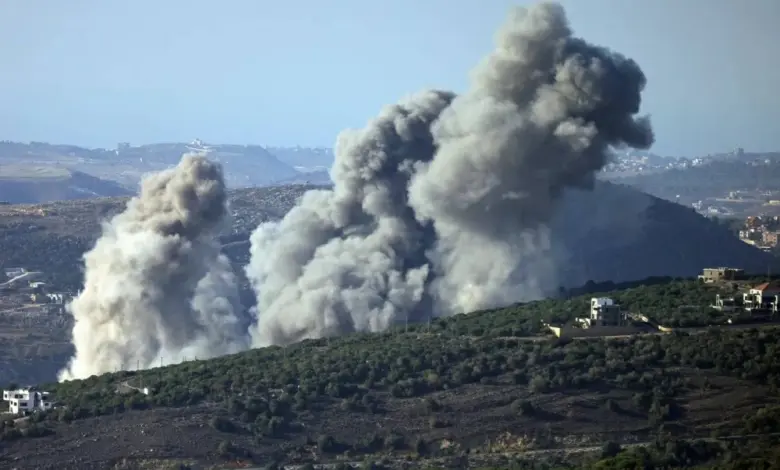
The last few hours witnessed a sudden military escalation on the Lebanese front, as the Israeli occupation air force carried out a series of simultaneous raids targeting multiple Hezbollah sites in South and East Lebanon, according to reports from Israeli channels.
Israel’s Channel 12 reported that the Israeli Air Force began shelling “Hezbollah targets,” claiming that the attacks included a training compound and additional targets, citing an Israeli security source. Moreover, Channel 14 claimed the army targeted the group’s “weapons depots and military positions.”
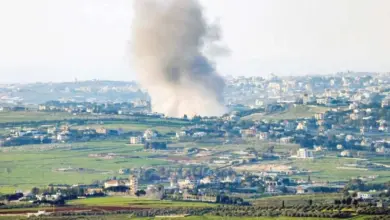
These statements coincided with field reports from local correspondents, which indicated an Israeli raid on the vicinity of the town of Zallaya in West Beqaa (East Lebanon), in addition to two raids near Al-Baysariyeh and Ansariyeh in the south of the country. Other raids were recorded on Mount Al-Rafie and the areas of Tebnin and Sijid, along with targeting the heights of Rihan in South Lebanon.
These raids occur within the context of the ongoing tension on the northern front since the outbreak of the Gaza war on October 7, 2023, when Hezbollah opened a front in support of Palestinian factions in the Strip. Since then, Southern Lebanon has witnessed a daily exchange of shelling and Israeli airstrikes, affecting military sites and inhabited areas, and leading to dozens of casualties among both civilians and Hezbollah fighters.
In recent months, the pace of clashes has escalated, with the scope of Israeli raids expanding deeper into Lebanese territory amid repeated Israeli threats to “change the rules of engagement.” This is met by Hezbollah’s affirmation of continuing the “deterrence equation” and preventing Israel from achieving field gains.
Observers fear that this current escalation may constitute a prelude to a more severe phase, especially given the expansion of the targeted area and the synchronization of the raids across multiple regions.