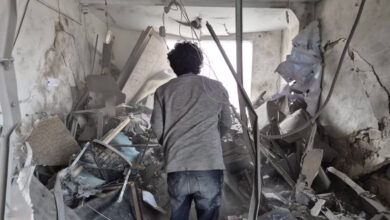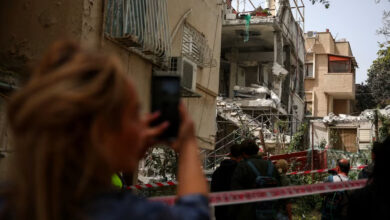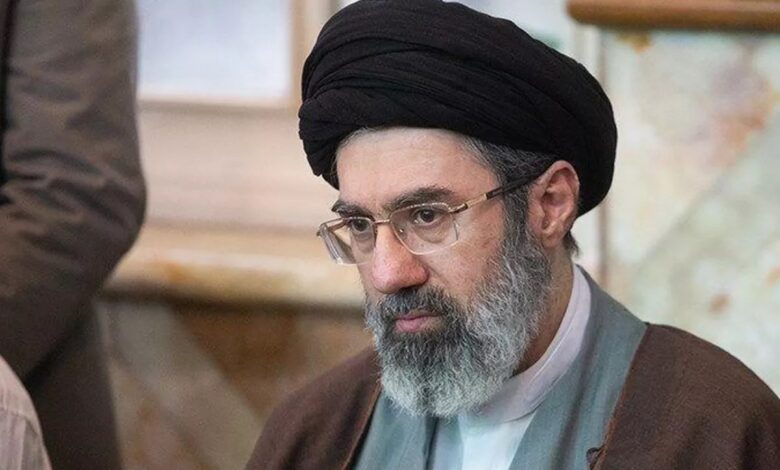
Iran’s Assembly of Experts announced on Monday the election of Mojtaba Khamenei as the new Supreme Leader of Iran, succeeding his late father, Ayatollah Ali Khamenei, who was killed at the start of the US-Israeli attack on Tehran on February 28.
The 88-member Assembly said: “In today’s extraordinary session, and based on the decisive vote of the esteemed representatives of the Assembly of Experts, Mojtaba Khamenei was appointed as the third Supreme Leader of the Islamic Republic of Iran since its establishment in 1979.”
Biography
Mojtaba Hosseini Khamenei was born on September 8, 1969, in Mashhad, northeastern Iran. He is the second son of the late Iranian Supreme Leader Ali Khamenei and one of his six children.
He is considered one of the most influential figures within the Khamenei family’s inner circle.
Mojtaba Khamenei received his secondary education at the Alavi Religious School in Tehran before moving in 1999 to Qom, one of the world’s most important centers of Shi’a religious studies, to continue his studies at the seminary.
He did not begin wearing religious attire until after moving to Qom and completing his religious studies.
Unlike his father, Mojtaba Khamenei has maintained a low profile in the public sphere. He has not held any official government position, nor is he known for giving public speeches or media interviews.
Mojtaba Khamenei married Zahra Haddad Adel, the daughter of Iranian politician Gholam Ali Haddad Adel, who held several prominent positions in the Iranian government, including Speaker of the Iranian Parliament, member of the Expediency Discernment Council, and head of the Academy of Persian Language and Literature, in addition to serving as a university professor.
Zahra Haddad Adel was killed alongside the late Iranian Supreme Leader in the Israeli-US attack that targeted his home.
Despite his distance from official positions, media and diplomatic reports indicate that Mojtaba Khamenei wields considerable influence within Iranian government circles.
His name rose to prominence in the public sphere in 2005 when reformist politician Mehdi Karroubi accused him of interfering in the Iranian presidential elections.
Mojtaba Khamenei belongs to the generation that grew up in the early years following the establishment of the Islamic Republic of Iran in 1979, a period that coincided with the Iran-Iraq War (1980-1988).
Edited translation from Al-Masry Al-Youm