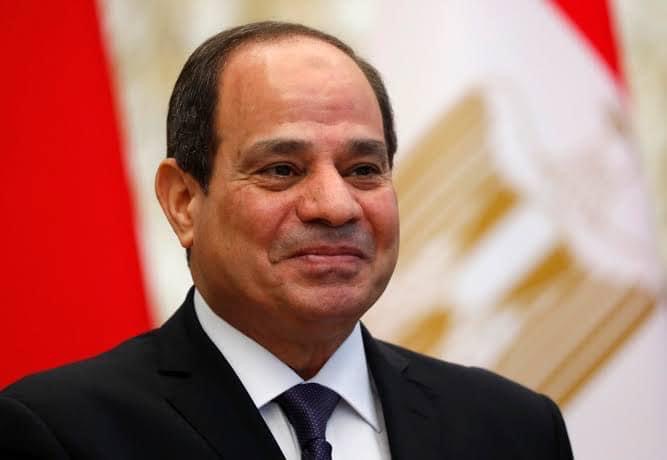
CAIRO, Nov 29 (MENA) – The Forum of the Parliamentary Assembly of the Union for the Mediterranean and the Summit of Speakers of Parliament witnessed wide praise from European and Arab delegations for President Abdel Fattah al-Sisi, describing him as a “voice of wisdom” and a statesman capable of managing crises with clarity and resolve.
Delegations affirmed that Egypt’s role has become central to preserving regional stability, and that the president’s efforts to halt the assault on Gaza and secure a ceasefire have significantly elevated Egypt’s international standing.
Parliamentarians also commended Egypt’s diplomatic efforts in Libya, Sudan and Syria, noting that Cairo has become the region’s political center of gravity and the origin of the most impactful peace initiatives.
The forum – hosted by Cairo – is one of the most significant parliamentary events in the region. The gathering transformed into a diplomatic and parliamentary epic that reaffirmed Egypt’s leadership, its pivotal role in advancing regional peace and security, and the global appreciation for President Sisi’s unwavering stance on the Palestinian cause.
European and Arab parliamentarians agreed that Cairo succeeded in shaping a clear vision for regional cooperation, noting that Egypt’s recent diplomatic efforts have laid the groundwork for genuine peaceful solutions amid persistent conflicts and tensions.
In the opening remarks, Speaker of the House of Representatives Hanafy Gebaly stressed that the Barcelona Process—celebrating its 30th anniversary—remains a historic milestone in building Euro-Mediterranean partnership.
He emphasized that the Cairo meeting provides an opportunity to review the path of cooperation, assess achievements and confront shared challenges with boldness.
Gebaly underlined that the region is experiencing unprecedented turmoil threatening collective security, and that Egypt under President Sisi has presented a unique model of active diplomacy to stop conflicts and support political tracks—most notably by hosting the Sharm El-Sheikh International Peace Summit, which set a roadmap for a just and lasting settlement.
He stressed that stability cannot be achieved without genuine economic growth, adding that Egypt has an ambitious vision to strengthen trade and energy connectivity across the Mediterranean, support green transition and encourage investment and technology transfer. He noted that Euro-Mediterranean partnership is not optional—it is a strategic necessity dictated by geography and interlinked interests.
In his address, MP Mohamed Abou al-Enein, Deputy Speaker of the House and President of the Parliamentary Assembly of the Union for the Mediterranean, affirmed that marking thirty years since Barcelona Process underscores the importance of building fair and balanced partnerships.
He noted that the Pact for the Mediterranean represents a historic opportunity to reshape regional cooperation based on shared interests rather than unilateral perspectives.
Abou El-Enein stressed that the Palestinian cause is the foundation of regional stability and that no new pact can be complete without a comprehensive and just solution, a full cessation of the aggression on Gaza and an absolute rejection of any plans for displacement or annexation.
He also called for inclusive political solutions in Libya and Sudan, reaffirmed that Egypt’s water security is a red line, and announced a proposed Egyptian mechanism for a permanent parliamentary body to monitor the implementation of the new Mediterranean pact.
The Cairo Declaration issued at the conclusion of the meetings encapsulated this broad consensus. It called for reviving the Barcelona Process with a more realistic spirit, supporting a ceasefire in Gaza, reconstruction efforts, opening crossings, and Israeli withdrawal within defined mechanisms.
The declaration rejected settlement expansion, annexation and displacement, and called for direct negotiations under international and regional sponsorship. It also reaffirmed support for Egypt’s water security in accordance with international law.
The declaration also addressed regional challenges in Libya, Sudan and Syria, stressing comprehensive political solutions, respect for sovereignty and territorial integrity, as well as enhanced cooperation on climate, energy, migration, education, the blue economy and digital transformation. It further proposed establishing a Mediterranean University and a Center for Scientific Diplomacy.
The forum concluded by affirming that reviving the Barcelona Process after thirty years is an urgent imperative to launch a new phase of regional integration and build a Mediterranean region that is more stable, prosperous and interconnected—one in which Egypt remains an indispensable leader and partner in shaping the region’s future. (MENA)