Iran and the United States have signaled they are closing in on an agreement to turn the existing ceasefire that ended weeks of conflict into a more long-lasting settlement.
Both sides are talking of a “memorandum of understanding” that will set out a roadmap for resolving all outstanding issues, although a deal is still a “work in progress,” according to US Secretary of State Macro Rubio.
“We’re either going to have a good agreement or we’re going to have to deal with it another way,” Rubio said during a visit to India on Monday.
But what is in that memorandum remains unclear.
The central premise of this approach is that the memo, once signed, would stop the fighting, which would be welcome news to both sides, with US President Donald Trump facing midterm elections later this year amid sharply higher gasoline prices and Iran’s economy in crisis.
The agreement would then see the gradual reopening of the Strait of Hormuz, and set off a 60-day process for tackling other issues, chief among them Iran’s nuclear program.
Rubio said there was “a pretty solid thing on the table” in terms of opening up the strait and in Iran entering into “a real significant time limited negotiation on nuclear matters.”
A senior administration official told CNN on Sunday that the framework agreement gives the parties “60 days to reach final deal points.”
According to the official, the potential deal would make sure Iran can never possess a nuclear weapon and would commit it to giving up highly enriched uranium, which the president often refers to as “nuclear dust.”
How the stockpile is disposed of would be a part of the next phase of negotiations.
“The important part of how this is structured is, if Iran doesn’t perform, they don’t get anything. No dust? No dollars. As the Strait opens, the blockade loosens proportionately,” the official said. “This is ‘trust but verify’ on steroids.”
However, Iranian officials and state media have offered different interpretations.
“We have reached understandings on a large portion of the issues under discussion. But to say this means an agreement is about to be signed — no one can make such a claim, ”said Foreign Ministry spokesman Esmail Baghaei Monday.
And after saying that the deal was “largely negotiated,” Trump said Sunday that the US would not rush into an agreement.
“If I make a deal with Iran, it will be a good and proper one, not like the one made by Obama,” Trump said in a post on Truth Social on Sunday, saying that deal gave Iran “a clear and open path to a Nuclear Weapon.”
Here’s what we know about some of the key issues at stake.
The Strait of Hormuz
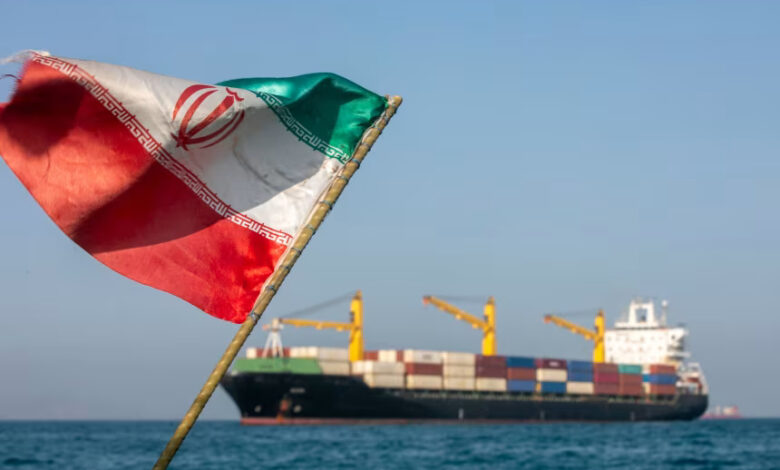
Trump wrote in a social media post late Saturday that the critical waterway, the Strait of Hormuz, would reopen under the memorandum.
But multiple Iranian media outlets, some of them close to the hardline Islamic Revolutionary Guard Corps (IRGC), reported Sunday that the strait would remain under Iranian supervision. Over a period of 30 days, Iran would allow shipping to return to pre-war levels.
Tehran has slightly shifted its tone on collecting tolls from ships that pass through the strait.
“We are not seeking to collect tolls – services are provided; navigation services plus necessary measures to protect the environment of the Strait of Hormuz,” Baghaei said Monday.
In effect, Iran appears to be signaling that while it may allow commercial traffic to return to pre-war volumes, it still intends to maintain a greater degree of control over passage through the strait than existed before the conflict.
“The strait is already open, but coordination with Iranian relevant authorities must happen to ensure safe transit,” said an Iranian source who spoke to CNN on Sunday.
Iran is demanding that the US blockade on its ports be lifted at the same time, but in a social media post Sunday Trump said: “The Blockade will remain in full force and effect until an agreement is reached, certified, and signed,” apparently referencing a final accord rather than the memorandum.
Iran has insisted that management of the strait has nothing to do with the United States but would be coordinated with Oman, to develop “a mechanism to ensure the safe passage of ships,” as Baghaei put it Monday.
Iran’s uranium stocks and enrichment
A potential agreement between the US and Iran includes a commitment by Iran to not pursue a nuclear weapon, CNN reported Sunday. Iran would also commit to enter negotiations on giving up its stockpile of highly enriched uranium and pause any new enrichment, according to a person familiar with the matter.
Iranian officials have insisted that negotiations about the uranium can only begin once a memorandum ending the war is agreed. Uranium is a key nuclear fuel that can be used to build a nuclear bomb if enriched to high levels.
The semi-official Fars news agency said Sunday that “Iran has made no commitments in this agreement regarding handing over nuclear stockpiles, removing equipment, closing facilities, or even pledging not to build a nuclear bomb.”
Trump has repeatedly insisted that one way or another Iran will have to relinquish the more than 400 kilograms (900 pounds) of highly enriched uranium it has. Much of it is thought to behave been buried after US strikes last year.
The initial memorandum is not expected to cover enrichment in any detail, and finding a way to bridge the two sides’ differences will be one of the major challenges of a comprehensive deal. Trump has cited Iran’s nuclear program as a key reason for the attack and previously said that a suspension of uranium enrichment for 20 years would be acceptable.
Iran’s frozen assets
With its economy in deep trouble, Iran is demanding the immediate unfreezing of billions of dollars in assets held in banks overseas.
“At the very beginning of this process, the status of releasing the blocked assets must be clarified,” Baghaei said Saturday.

Citing an “informed source,” Tasnim said on Sunday that “without the release of a specific portion of Iran’s blocked assets in this very first step – along with a clear mechanism for the guaranteed, continued release of all blocked assets – there will be no agreement.”
But a senior US administration official told CNN on Sunday that the unfreezing of Iranian assets will occur only once the Strait of Hormuz has reopened.
The US has given no commitment on how these assets, which are held in several foreign banks, will be returned to Iran.
Sanctions
Iran’s economy is also suffering from a huge array of international sanctions, most of them imposed by the US and Europe.
“Lifting sanctions will not be discussed in this short timeframe,” Baghaei said Saturday, even though “Iran’s demand to lift all sanctions is explicitly in the text.”
“Details must be negotiated after the memorandum is finalized,” he added, suggesting that the suspension of sanctions will be linked to the nuclear issue.
Iran estimates removal of sanctions on oil sales alone could generate nearly $10 billion in revenue for the government over a 60-day period, Fars news agency reported.
As with Iran’s frozen assets, sanctions imposed on Iran will only be lifted once the Strait of Hormuz is open and fully functioning again, a US official told CNN.
Ballistic missiles
During the conflict, US officials said that Iran’s longer-range ballistic missiles must be destroyed. Trump said that its “conventional ballistic missile program was growing rapidly and dramatically.” But there has been less talk recently of the missile arsenal being part of broader negotiations, even though Israel and Gulf Arab states see it as an urgent risk.
Lebanon
It’s also unclear how or whether the conflict between Israel and the Iran-backed Hezbollah in Lebanon will be addressed in any memorandum.
Tasnim reported Sunday that its wording refers to “the declaration of the end of war on all fronts, including Lebanon.”

Baghaei said similar on Monday. “Stopping the war on all fronts, including Lebanon, will be one of the elements of the possible understanding.”
But Trump told Israeli Prime Minister Benjamin Netanyahu he supports the country’s wish to “maintain freedom of action against threats on all fronts, including Lebanon,” an Israeli official told CNN.
In a call with Trump on Saturday evening, Netanyahu “emphasized that Israel will maintain freedom of action against threats on all fronts, including Lebanon, and President Trump reiterated his support for this principle,” the official said on Sunday.
Ultimately, Iran insists it is ready for a “fair and balanced deal,” the Iranian source told CNN Sunday. “The most important thing for us is that the war must end for good in the whole Middle East.”
CNN’s Tal Shalev contributed to this report.