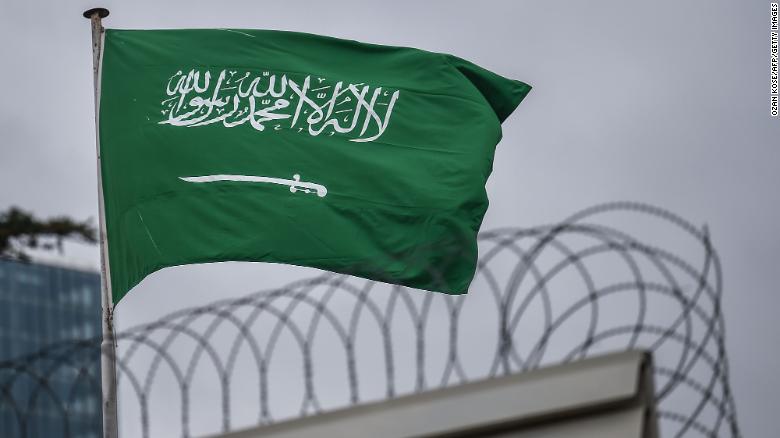
Saudi Arabia, Pakistan and Turkey signed a mutual defense agreement on Friday, as Riyadh faces escalating attacks from Yemen’s Iran-backed Huthi rebels in recent days.
The agreement, signed in Mecca, sees Saudi Arabia draw two of the Muslim world’s most formidable military powers to its defense, transforming their longstanding security ties into a collective-defense alliance. The pact stipulates that it would treat an attack on any of the countries as an attack on all — similar to NATO’s Article 5 principle.
It comes as the Houthis on Friday carried out an attack on Saudi forces at a base in eastern Yemen, according to the group’s spokesperson.
Meanwhile, US sources told CNN that the Chairman of the Joint Chiefs, Gen. Dan Caine, has privately made clear that the US needs to find an off-ramp from the war with Iran — because the military options on the table to escalate the conflict could backfire.
Catch up on the day’s biggest developments here:
In Yemen:
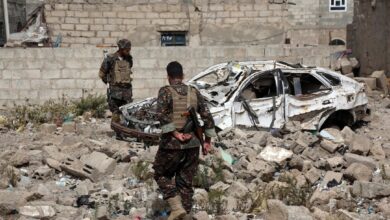
- Escalating Huthi attacks: The group claimed responsibility for strikes in Yemen’s eastern Marib province. Earlier, Health Minister Qasim Buhaibeh said the shelling had killed at least two civilians and injured 14 others. In a separate attack the previous day, the group claimed responsibility for a “large-scale” operation on government military camps in two eastern provinces, reportedly killing 30 troops.
In Iraq:
- Iraqi militias postpone attacks: Iraqi Prime Minister Ali Faleh al-Zaidi met with Saudi Arabia’s intelligence chief Khalid bin Ali al-Humaidan on Friday to discuss security coordination and information sharing. Meanwhile, the Islamic Resistance in Iraq, a coalition of pro-Iran militias, delayed retaliatory attacks for deadly US-Saudi strikes on the country due to what it said was “honorable positions taken by some honorable political leaders.” On Thursday, a Saudi official told CNN that the kingdom was bracing for “multiple coordinated attacks” by Houthis and Iraqi militia.
In Iran:
- Warning over defense pact: Saudi Arabia’s mutual defense pact will not guarantee the kingdom’s security, a senior Iranian official warned. “The Saudis should understand that a paper agreement with Turkey and Pakistan will not bring them security, just as decades of one-sided dependence on the Americans failed to do so,” Ebrahim Rezaei, a member of the Iranian parliament’s National Security and Foreign Policy Committee, said on X.
- Strait of Hormuz: Iranian lawmakers are waiting for “final approval” on a proposed framework agreement with Oman for shipping in the Strait of Hormuz, according to Iran’s state media. Iranian and Omani shipping routes through the waterway will remain in temporary use under an emerging agreement between the two countries before being replaced by a central course, Iran’s semi-official Fars News Agency reported on Friday.
CNN’s Abbas Al Lawati, Eyad Kourdi, Mitchell McCluskey, Aida Karimi, Sana Noor Haq and Issy Ronald contributed reporting to this post.