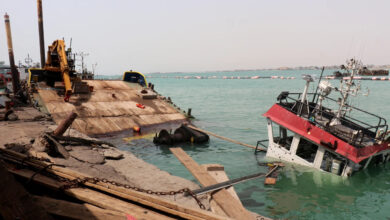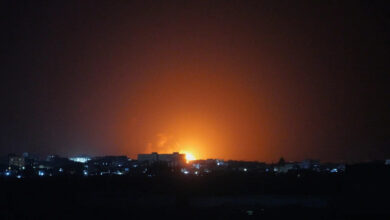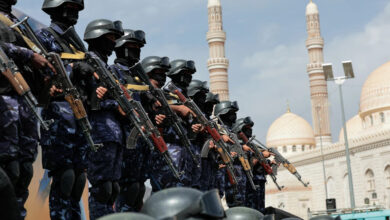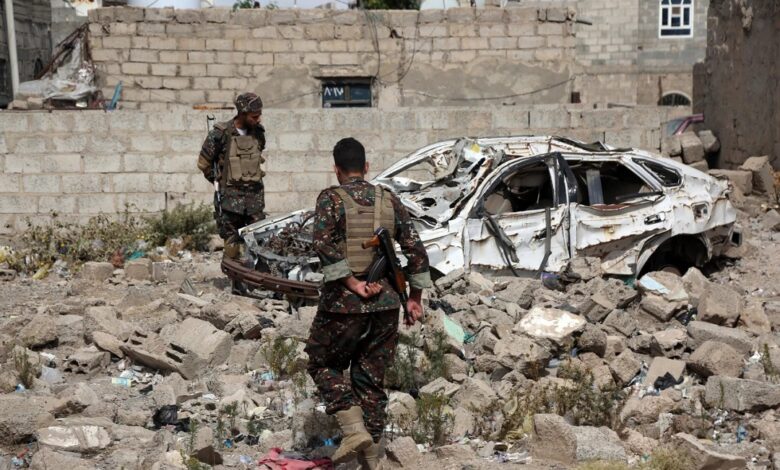
Yemen’s Iran-backed Huthi rebels claimed heavy strikes on government military camps in two eastern provinces this week, reportedly killing 30 troops.
The Huthis declared a “large scale” operation on Thursday with ballistic missiles and drones in several areas of Yemen, citing Saudi military buildups “aimed at escalating the aggression” in areas under their control. The group offered no evidence, but Reuters said at least 30 Yemeni government troops were killed by Huthi salvoes in Marib and Hadhramawt, citing government sources.
The latest attacks marked a spike in hostilities between the Huthis and the Saudi-backed, internationally recognized central government established in 2022 to unify fragmented factions against them.
The Huthis have been at war with a Saudi-led military alliance in Yemen since 2014.
Here’s what you need to know about the fighting in Yemen:
The civil war
In 2014, the Huthis stormed the north of the country and took over the capital, Sana’a. Saudi Arabia and the UAE intervened the following year, propping up the local government and militias under a unified vision of destroying the Huthis over years of civil war.
The Huthis gained momentum at home under Iran’s “Axis of Resistance,” receiving weapons and missile technology following the Arab Spring and evolving from an armed group in the 1990s into a fully fledged, Tehran-backed player.
A shaky truce
The Saudi-led military alliance and the Houthis agreed to a truce in 2022. However, rivalries then opened up between Yemeni factions, giving way to multiple spheres of influence and handing Iran expanded leverage on the southern flank of the Arabian Peninsula.
At the same time, Saudi Arabia held an economic and air blockade on Huthi-controlled swathes of Yemen, which the group has tried to break in recent weeks.
What now?
Yemen has been marked by years of internal divisions driven by ideological differences. Recurring violence has condemned millions of people to mass displacement, political instability and hunger, according to the UN.
Last month, the agency warned food insecurity was approaching “catastrophic levels,” even before the latest resurgence in violence linked to the ongoing conflict in Iran.
CNN’s Tim Lister and Nic Robertson contributed reporting.