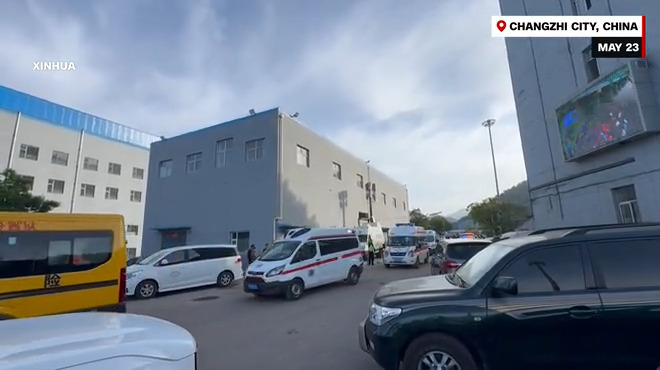
A gas explosion at a coal mine in northern China has killed 90 people, according to state media, the country’s deadliest mining disaster in more than a decade.
Rescue efforts were still underway as of Saturday afternoon, nearly 20 hours after the blast took place, according to state broadcaster CCTV.
Nearly 250 people were working underground at the facility in Shanxi province when the explosion took place Friday evening. At least 201 people were evacuated as of Saturday morning, CCTV reported, adding later in the day that 123 were undergoing treatment in hospital.
It remains unclear if there are still workers unaccounted for.
Chinese leader Xi Jinping earlier in the day called for an “all-out rescue” of the missing, state news agency Xinhua reported, saying he also urged a “thorough investigation” and “accountability” for the incident.
Earlier, Xinhua reported that carbon monoxide levels “exceeded limits” inside the Liushenyu coal mine, which is located in the city of Changzhi in Qinyuan county.
Hundreds of personnel were involved in the underground rescue response, the county’s Emergency Management Bureau told CNN.
Contacted by CNN, a person answering the phone at the company operating the mine – Shanxi Tongzhou Group Liushenyu Coal Industry – said they were “not aware of the situation,” and ended the call.
State media on Saturday reported that the person in charge of the “involved enterprise had been taken under control measures according to law.”
The cause of the blast is under investigation, Xinhua reported.
The disaster is the latest in a long line of devastating, deadly incidents linked to coal mining in China. The early 2000s saw multiple mining incidents with death tolls over 100.
Safety records have improved since then, alongside industry consolidation and tightened regulation, but tragedies have continued to happen – typically followed by central government calls for more accountability and oversight.
In 2023, 53 workers were killed in a mine collapse in Inner Mongolia, state media reported. The following year, Beijing implemented new coal-mining regulations putting more burden on operators to conduct checks, and local officials to enhance supervision.
Coal is a major source of energy in China, accounting for more than half of the energy consumption of the world’s second-largest economy – and playing a critical role in its energy security.
Even as Beijing has pushed forward a green transition, the country has continued to expand coal infrastructure, including to ensure grid stability for renewable energy sources like wind and solar.
Shanxi province, where the latest incident took place, is one of the country’s leading producers, accounting more than a quarter of the country’s coal.