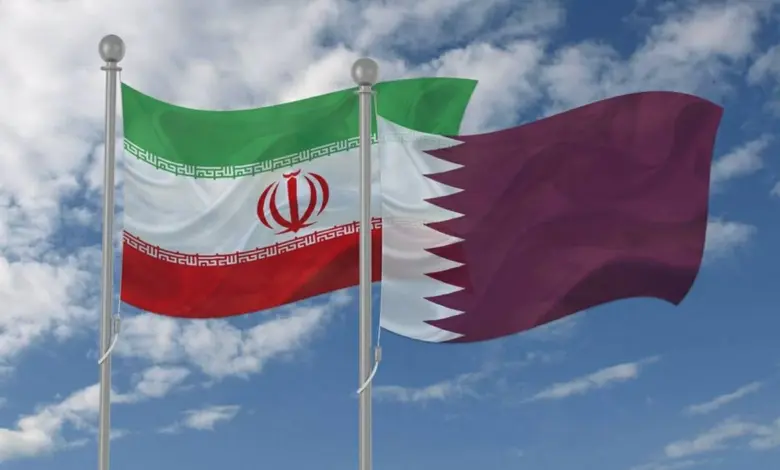
In an exclusive report citing Middle Eastern and Western security and intelligence sources, the American newspaper The Washington Post has revealed details of alleged secret communications between Doha and Tehran during the early days of the war.
According to Israel’s Channel 12, Qatar reportedly initiated these contacts to protect its vital gas facilities from military targeting, offering in exchange a proposition that would undermine Israel and the United States.
Gas for safety
According to the report, the Iranian missile attack in mid-March that targeted Qatar’s Ras Laffan—the largest gas facility in the world—did more than just inflict material damage and send shockwaves through global energy markets; it also exposed highly sensitive diplomatic maneuvering behind the scenes.
Intelligence information obtained by the newspaper indicates that Qatari representatives contacted Iranian officials at the onset of the war, offering what sources described as a “simple deal.” The terms stipulated that Iran would pledge not to target Qatari energy facilities in exchange for Qatar voluntarily halting its gas production.
How Qatar sought to leverage gas influence to end Iran’s war
Sources pointed out that the proposal was driven by both political and economic calculations. A shutdown at Ras Laffan, which supplies roughly one-fifth of the world’s global gas provisions, would trigger a sharp and immediate spike in global energy prices.
According to the report, Doha believed the resulting economic pressure would compel the United States and Israel to immediately terminate or drastically shorten the duration of the war.
The Washington Post quoted a senior regional security official who stated that Qatar offered to leverage its influence in the gas market to help end the fighting, in exchange for a single Iranian guarantee: that Qatari territory and facilities would not be targeted.
The official added that the Qatari message to Tehran was explicit: “You will achieve your goals in this war even without causing harm to us.”
Although Iran issued no clear or official response to the offer, the report noted that the Qatari side appeared to have already begun fulfilling its end of the bargain.
On March 2nd—the third day of the war—Qatar abruptly announced the closure of the Ras Laffan facility. This coincided with Iran launching hundreds of missiles and drones toward various targets across the Gulf region.
While Doha justified the shutdown at the time as a necessary response to “regional military attacks,” The Washington Postnoted that satellite imagery it later reviewed showed no physical damage to the facility during those initial days.
The report further highlighted that during this period, Qatar’s Energy Minister warned that a prolonged war could lead to the “collapse of global economies,” remarks that underscored the deep anxieties surrounding the conflict’s impact on energy markets.
Doha denies the allegations
On the other hand, Qatari officials have fiercely denied these allegations, maintaining that the decision to close the facility was strictly a security measure taken to protect workers and infrastructure.
They dismissed the claims as a deliberate attempt to undermine Qatar’s role as a regional mediator and damage its strategic relations with the United States.