Minister of Water Resources and Irrigation Hani Sewilam affirmed that Egypt is pursuing an integrated approach to maximize the efficient use of its available water resources by improving water-use efficiency, expanding the reuse of agricultural drainage water and optimizing the use of every drop of water, particularly in light of the country’s limited water resources and growing demand.
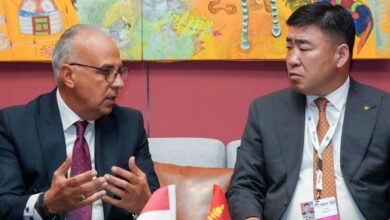
Sewilam made the remarks during a lecture titled “Innovations in Water Resources Management,” delivered on the sidelines of his participation in the 17th Session of the Conference of the Parties to the United Nations Convention to Combat Desertification (COP17), being held in Mongolia.
During the lecture, the minister outlined the main features of Egypt’s water resources system and reviewed the country’s water resources and needs, as well as measures being implemented to strengthen water security and ensure sustainable management of available resources.
Sewilam also highlighted Egypt’s efforts to deepen cooperation with Nile Basin countries and other African nations, stressing that Egypt attaches great importance to regional cooperation as a means of advancing sustainable development and promoting the exchange of expertise and knowledge in water resources management, in a manner that serves the common interests of African peoples.
The minister outlined the main pillars of the second generation of Egypt’s water management system (Water 2.0), with a particular focus on rehabilitating and upgrading water infrastructure and deploying advanced technologies to enhance the management and operation of the water system.
He noted that the ministry is expanding the use of satellite imagery and unmanned aerial vehicles (drones) for monitoring and surveillance, enabling the collection of accurate, real-time data and enhancing decision-making capabilities.
Sewilam also presented Egypt’s digital twin project for the Ismailia Canal as a pioneering example of applying advanced technology to water management.
The project represents a significant step toward the digital transformation of the water system by integrating data and modern technologies into the monitoring and management of water resources and improving operational efficiency.
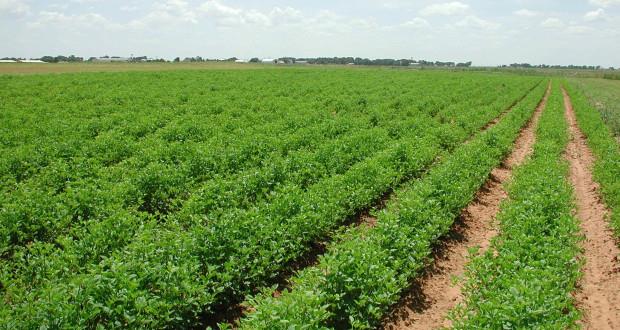
The minister further reviewed the state’s efforts to treat and reuse agricultural drainage water, describing the initiative as a key component of Egypt’s strategy to maximize the use of available water resources.
He also highlighted ongoing efforts to protect Egypt’s coastlines through environmentally friendly materials and nature-based solutions, helping mitigate the increasing impacts of climate change and safeguard vulnerable coastal areas.
Sewilam underscored the importance of good governance and institutional capacity-building in water resources management.
He pointed to the ministry’s efforts to strengthen the participation of water users through the establishment and support of Water User Associations, while also enhancing communication with members of the House of Representatives and the Senate.
These efforts, he said, promote greater coordination among the ministry, water users and legislative institutions in addressing water-related challenges.
The minister also highlighted a pioneering initiative launched by the Ministry of Water Resources and Irrigation to train rural women in using water hyacinth to produce handicrafts. The initiative seeks to turn an environmental challenge into an opportunity for economic empowerment, income generation and job creation.
Sewilam affirmed that Egypt will continue to modernize and strengthen its water management system by integrating modern infrastructure, advanced technology, water reuse, nature-based solutions, sound governance and community participation under the second generation of the national water management system.
This integrated approach, he stressed, is essential to ensuring the long-term sustainability of Egypt’s water resources, strengthening water security and supporting the country’s broader development objectives.