“Ayatollah,” an Arabic term meaning “sign of God” or “divine sign,” is a senior clerical title in Twelver Shiite Islam typically reserved for scholars who have spent decades studying and teaching Islamic jurisprudence and theology in seminaries.
An ayatollah is generally regarded as a mujtahid — a jurist qualified to use independent legal reasoning and issue religious rulings.
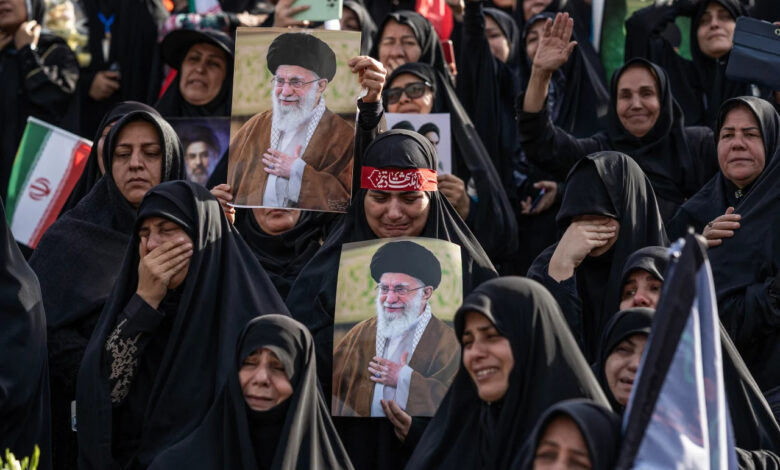
While “ayatollah” is fundamentally a religious title, it has become closely intertwined with political authority in Iran since the 1979 Islamic Revolution, particularly because the country’s supreme leader is expected to have high-level religious credentials. Shiite Islam is Iran’s official state religion, followed by an estimated 90 to 95 percent of the population.
The title has also taken on heightened political significance in recent years as Iranian state-linked institutions and media increasingly referred to Mojtaba Khamenei as an “ayatollah” as part of an effort to bolster his religious standing.
Before succeeding his late father Ayatollah Ali Khamenei as supreme leader, Mojtaba Khamenei was widely described as a hojatoleslam, a rank below ayatollah.
Under Iran’s constitution, the supreme leader must be a senior Islamic jurist, and elevating Mojtaba Khamenei’s clerical rank was seen by observers as a way to strengthen the religious legitimacy required for succession.
Analysts say the move also signalled a preference among hard-line power centers, including elements aligned with the Islamic Revolutionary Guard Corps, for a continuity candidate during a period of heightened instability, given that Ali Khamenei was killed following a deadly airstrike on the first day of the US-Israeli war with Iran on February 28.
Some context: A central question looming over the funeral is whether Mojtaba Khamenei will appear to lead prayers for his father.
Mojtaba is believed to have been seriously wounded in that attack, which also killed his mother and his wife. He has remained in hiding since the war began, communicating with his supporters only through written statements, never showing his face or using his voice.