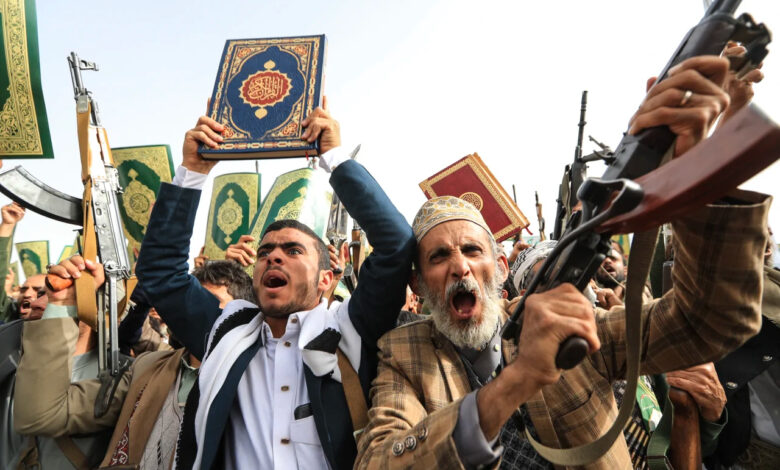
The Israeli military said Monday it intercepted a missile launched from Yemen — the first such incident reported since April. The Iran-backed Huthi rebel group claimed responsibility for the attack.
Yemen is home to the Huthis, who have frequently fired missiles and drones at Israel, both during the war in Gaza and the war with Iran.
Who they are
The Huthi movement, also known as Ansar Allah (Supporters of God), is one side of the Yemeni civil war. It emerged in the 1990s, when its leader, Hussein al-Huthi, launched “Believing Youth,” a religious revival movement for a centuries-old subsect of Shia Islam called Zaidism.
The Zaidis ruled Yemen for centuries but were marginalized under the Sunni regime that came to power after the 1962 civil war. Al-Huthi’s movement was founded to represent Zaidis and resist radical Sunnism, particularly Wahhabi ideas from Saudi Arabia. His closest followers became known as Huthis.
Yemen’s civil war began in 2014, when Huthi forces stormed the capital Sanaa and toppled the internationally recognized and Saudi-backed government. The conflict spiraled into a wider war in 2015 when a Saudi-led coalition intervened in an attempt to beat back the Huthis.
A ceasefire was signed in 2022, but it lapsed just after six months. Warring parties have not, however, returned to full-scale conflict.
Huthis’ allies
Iran began increasing its aid to the Huthis in 2014 as the civil war escalated and as its rivalry with Saudi Arabia intensified.
The Huthis form part of Iran’s so-called “Axis of Resistance” — an anti-Israel and anti-Western alliance of regional militias backed by the Islamic Republic.