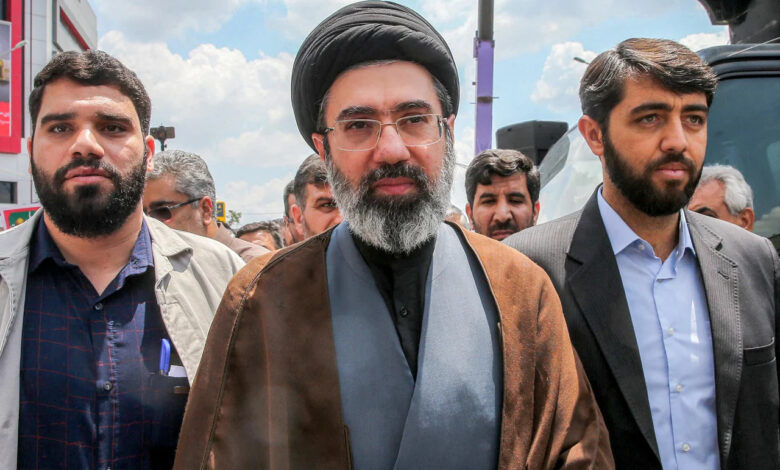
A central question looming over the upcoming funeral is whether Mojtaba Khamenei, the new supreme leader and son of the slain Ayatollah, will appear to lead prayers for his father, who died in a US-Israeli strike.
Mojtaba is believed to have been seriously wounded in that attack, which also killed his mother and his wife. He has remained in hiding since the war began in late February, communicating with his supporters only through written statements, never showing his face or using his voice.
Iranian officials have worked to project an image of full recovery, claiming he is even directing Tehran’s negotiations with Washington.
His appearance would be momentous, marking his first public emergence, and helping to establish his legitimacy at home.
But a failure to appear will fuel doubts about his wellbeing, as well as questions over who is running the country. On Wednesday, the leader failed to attend a private ceremony for his late wife.
Iranian Foreign Minister Abbas Araqchi warned on Wednesday that Tehran would deliver an immediate and powerful response to any threat against its leadership after Israeli Defense Minister Israel Katz said that Khamenei was “marked for death.”
Not appearing at the funeral would likely be spun by the Islamic Republic as a necessary security measure amid the ongoing conflict. Yet it would leave far more questions unanswered and deepen skepticism about his health and readiness to lead.
Questions are already swirling inside Iran. When asked this week about Khamenei’s attendance, the head of the authority organizing the funeral, Ali Akbar Pourjamshidian, deflected. “This matter is not within our domain and the decision lies entirely with the (supreme) leader’s office,” he said.