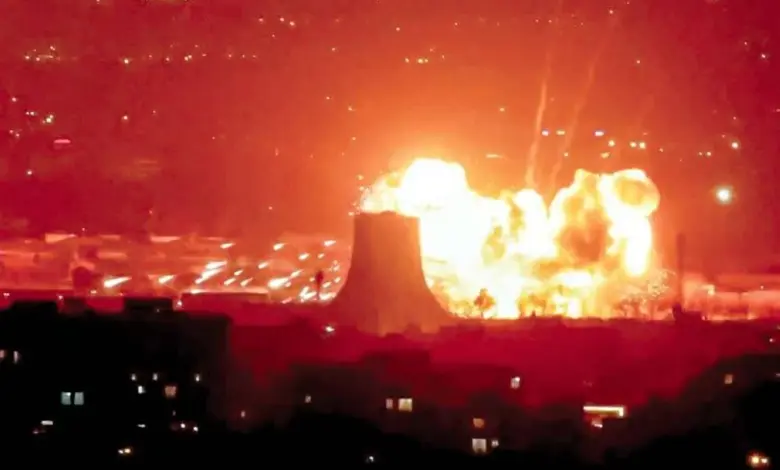
Data from the Institute for National Security Studies (INSS) indicates that Israel has significantly intensified its military campaign against Iran, tripling the frequency of its strikes as the center of gravity shifts from American to Israeli operations.
According to reports from Yedioth Ahronoth, the recent surge in Israeli activity suggests a strategic pivot.
Analysts believe this escalation stems from Israel’s concerns that President Donald Trump may halt the operation prematurely due to mounting domestic political pressure and US public opinion.
Shift in operational tempo
The campaign has seen a dramatic reversal in strike volume between the two allied forces:
- The Initial phase (Days 1–5)
During the first five days of the war, American forces conducted more than three times the number of strikes compared to Israel.
During this period, the US targeted approximately 2,000 objectives in Iran, while Israel carried out roughly 600 strikes.
- The “next phase” (post-week 1)
Following the first week and the joint declaration of the operation’s “next phase,” the trend inverted.
Since then, Israeli forces have executed nearly three times the number of US strikes, hitting approximately 2,800 targets compared to roughly 1,000 US strikes.
To date, Israel has taken the lead in the “Operation Roaring Lion” air campaign, striking 3,400 targets in Iran and 600 in Lebanon, surpassing the total of 3,000 strikes conducted by US forces.
The INSS data highlights that while the US has maintained the steady operational tempo established in the war’s opening days, Israel has aggressively accelerated its pace.
This strategic “handoff” indicates that Israel is now leading the primary offensive inside Iranian territory, even as it continues to manage a secondary front against Hezbollah in Lebanon.