An Egyptian archaeological mission has uncovered an ancient cemetery and settlement in Daqahliya Governorate, revealing evidence of human occupation in the eastern Nile Delta spanning thousands of years.
The Supreme Council of Antiquities said that excavations at the Kom el Khilgan archaeological site uncovered burials dating from the Predynastic Period through the Greek and Roman eras, as well as a settlement from the Second Intermediate Period.
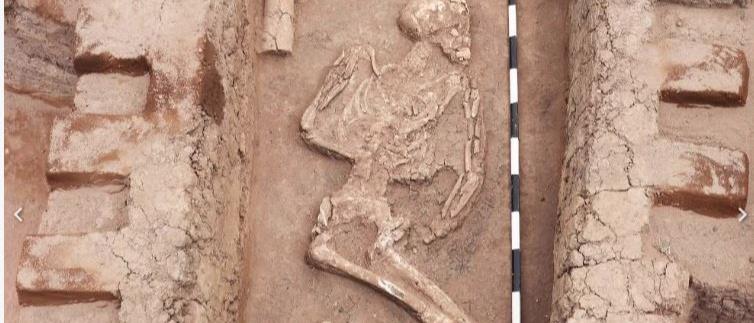
The oldest finds date to the first half of the fourth millennium BC and include simple oval burial pits containing human remains, handmade pottery and seashells. The number of burials suggests that a sizeable community lived in the area at the time.
Archaeologists also discovered mud-brick buildings, grain silos, ovens and hearths dating from the Second Intermediate Period and continuing into the New Kingdom.
Tombs from the 15th to 17th Dynasties were also found, providing evidence that the area was inhabited during the Hyksos period, when nearby Avaris was their capital. Burial objects included jewelry, amulets, scarabs, bronze tools and weapons, and pottery.
Other discoveries included an early 18th Dynasty mud-brick tomb and Ptolemaic burials, including the remains of a child placed inside two reused amphorae.
Excavations are continuing at the site to uncover further evidence about settlement, daily life and burial practices in the eastern Nile Delta.