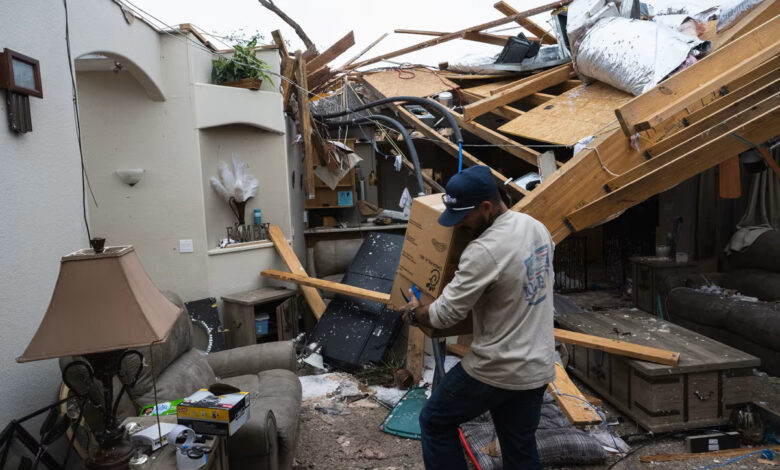
Extreme weather has impacted every corner of the US, from deadly floods to sweltering heat. For Americans, the changing climate has made protecting their homes increasingly important.
Finding a “climate haven” in the United States has become more difficult with the warming planet. Storms can dump biblical amounts of rain in mountainous regions from Vermont to Kentucky to New Mexico. In 2023, Phoenix spent over 50 days baking in over 110-degree Fahrenheit heat, and the city hit triple digits in March this year. The rest of the Southeast is staring down a historically dry start to the year, with fears about wildfires and drought.
But there are key ways to make your home more resilient to a hotter climate and stronger weather, experts say. Much of it begins even before you buy the house.
Information is power
Some of the most important decisions you can make to climate-proof your home happen before the sale closes, experts told CNN. In many cases, learning about the natural environment around a home matters just as much as learning about the home itself.
“The first step to protecting yourself from climate risk during the home buying process is simply knowing what the risk actually is,” Jeremy Porter, chief economist at risk modeling company First Street, wrote in an email to CNN.

First Street uses models to generate risk scores for climate change-fueled disasters like wildfires, coastal and rainstorm flooding, high winds, extreme heat and air quality. These risk scores are displayed on real estate websites including Redfin and Realtor.com.
(Zillow stopped featuring First Street’s climate data on home listings last year, after facing pressure from the California Regional Multiple Listing Service, a subscriber-based listing service. However, Zillow still links its data.)
Especially as home insurance costs in some areas climb, a prospective homebuyer looking at their risk profile “gets a much clearer picture of what that home will really cost them year over year,” Porter said.
Find an area that can handle storms
Prospective homeowners may want to find towns that are intentionally designed to withstand stronger storms, bigger wildfires or even hotter temperatures.
For example, the town of Babcock Ranch lies 50 miles south of Tampa on Florida’s Gulf Coast and has successfully weathered multiple major hurricanes.

The town was built to withstand stronger storms with a natural wetland barrier and a series of interconnected lakes that serve as catch basins for excess flood water. And Babcock Ranch buried power lines and built a vast solar array to keep the lights on during four major hurricanes in the last nine years.
But most prospective homeowners don’t have the advantage of buying into a town that was intentionally designed to withstand extreme weather. When looking in mountainous areas, find homes at higher elevations and away from rivers or streams – or engineer earthen berms and swales that help guide flooding runoff away from the home, experts say.
Small ways to climate-proof your home
Homeowners “at pretty much any budget” can make their homes more resilient, Porter said.
People at risk of flooding can extend their downspouts farther away from their home’s foundation or seal foundation cracks. For those at risk of high winds, trimming trees near the house and reinforcing the garage door are lower-cost fixes.

People living in an area with wildfire risk can keep dry vegetation away from their houses and install vent screens resistant to embers. Far more expensive options include fortifying a home’s roof and siding to be resistant to wind or wildfire or fully elevating a home in a flood-prone area.
Once again, looking at the environment around the home is a good starting point. Having a home or apartment in an environment with lots of trees can help provide ample natural shade. On the other hand, having a home in an area with ample sunlight can help homeowners with solar panels generate their own energy.
Enhance your insulation
Good insulation is one of the most important components for comfort and energy efficiency inside a home, said Jonathan Grinham, assistant professor of architecture at Harvard University.
“If it’s hot outside, we can keep that heat from transferring into the building. The building is going to stay cooler, and we’re going to require less cooling,” Grinham said. Insulation acts the opposite way in the wintertime, creating a barrier to keep the cold air out and warm air in.
“The system’s going to have to work less” with good insulation, Grinham said.
That insulation helps save homeowners money on their bills, and it’s better for the climate – especially when paired with energy-efficient appliances like heat pumps and rooftop solar systems. Those appliances can cost more up front but save consumers energy and money in the long run.
For Grinham, energy efficiency and climate resiliency often go hand in hand.
“For me, it’s less can we climate-proof, but it’s more of what quality of life do we want to live,” he said. “The strategies that we have for improving the home around climate are going to provide a better quality of life.”