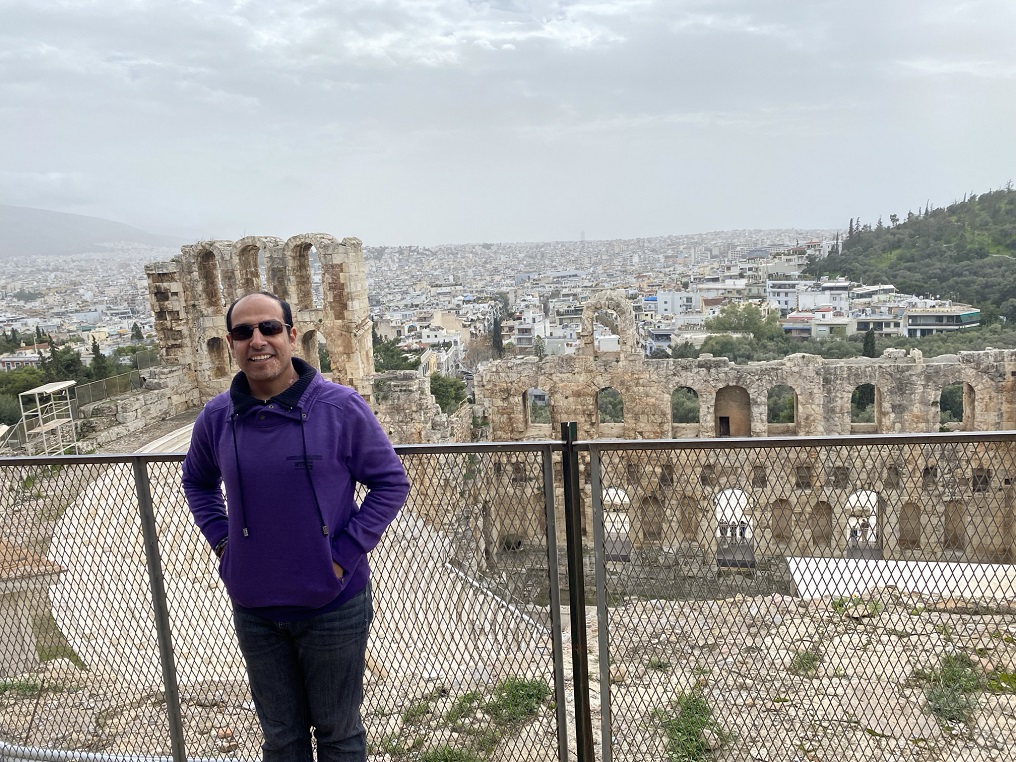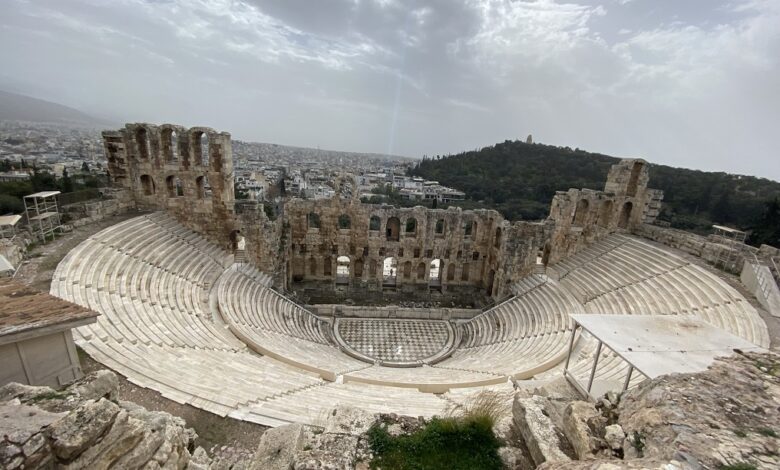
Amidst the remnants of temples, preserving the echoes of a thousand stories in Athens, the Odeon of Herodes Atticus appears like an open page from the city’s ancient past.
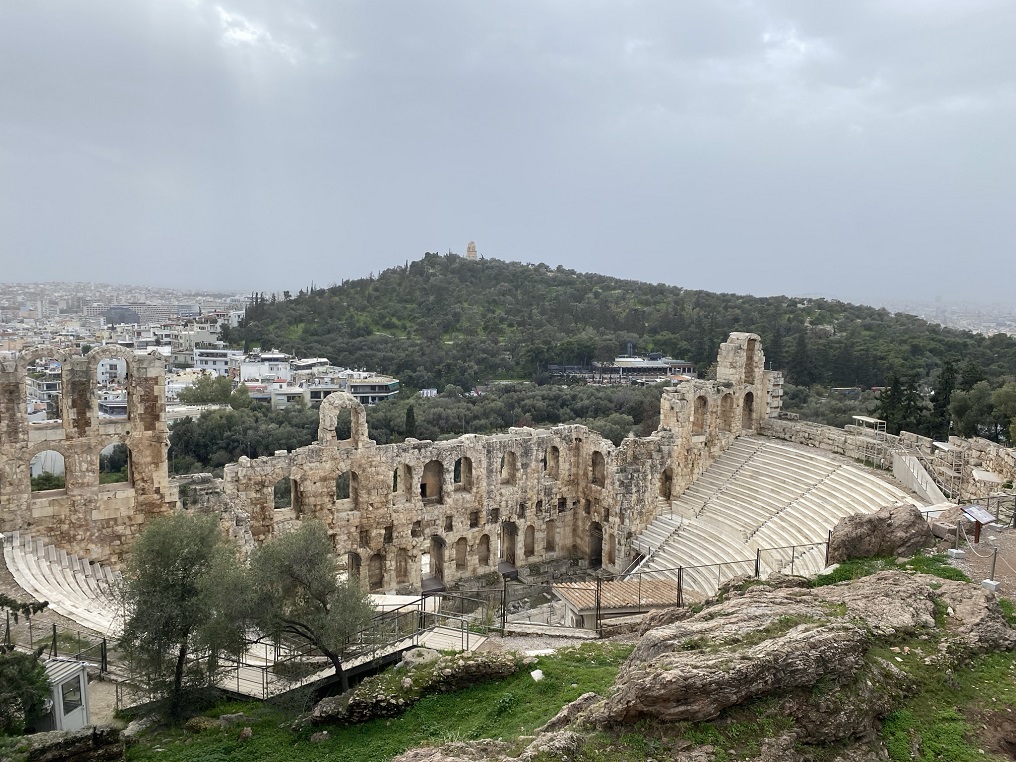
With its semi-circular stone tiers, a stage facing the horizon, and a towering three-story arched stone wall, every element suggests that this place was built for more than just performance— but as a lasting celebration of art and life.
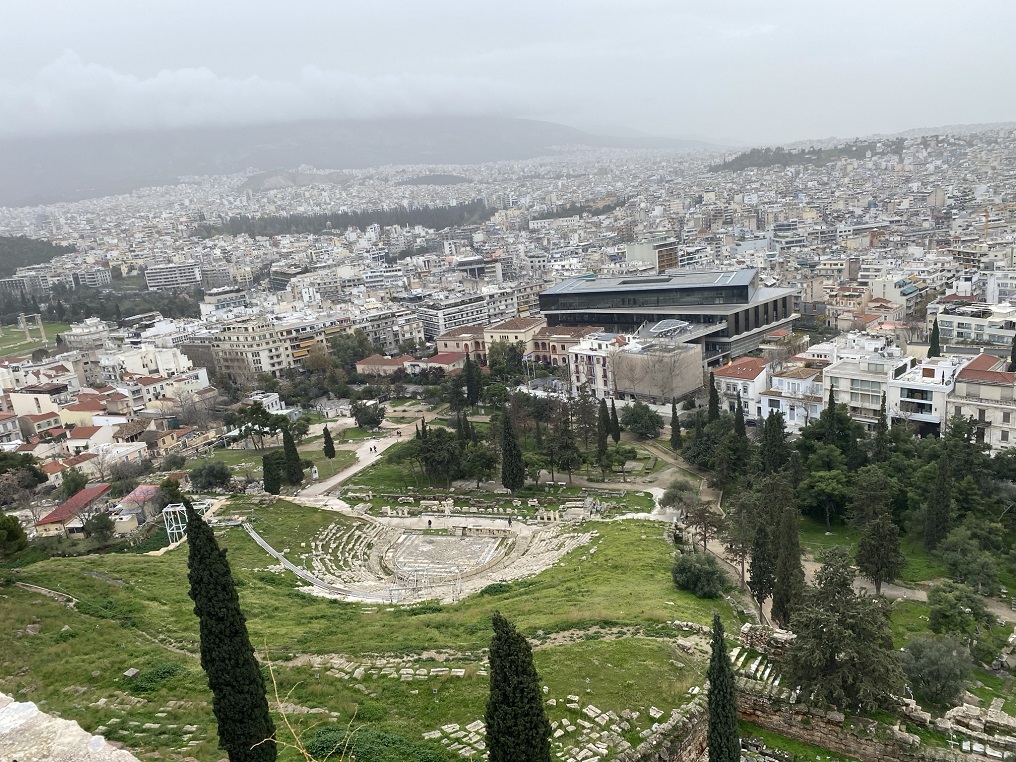
Located directly beneath the Acropolis, in one of Greece’s most symbolic historical sites, the theater offers visitors an immediate escape from the modern capital.
Stepping into the ancient stands, the modern city fades away – replaced by an era where music, poetry, and oratory were the very heartbeat of daily life.
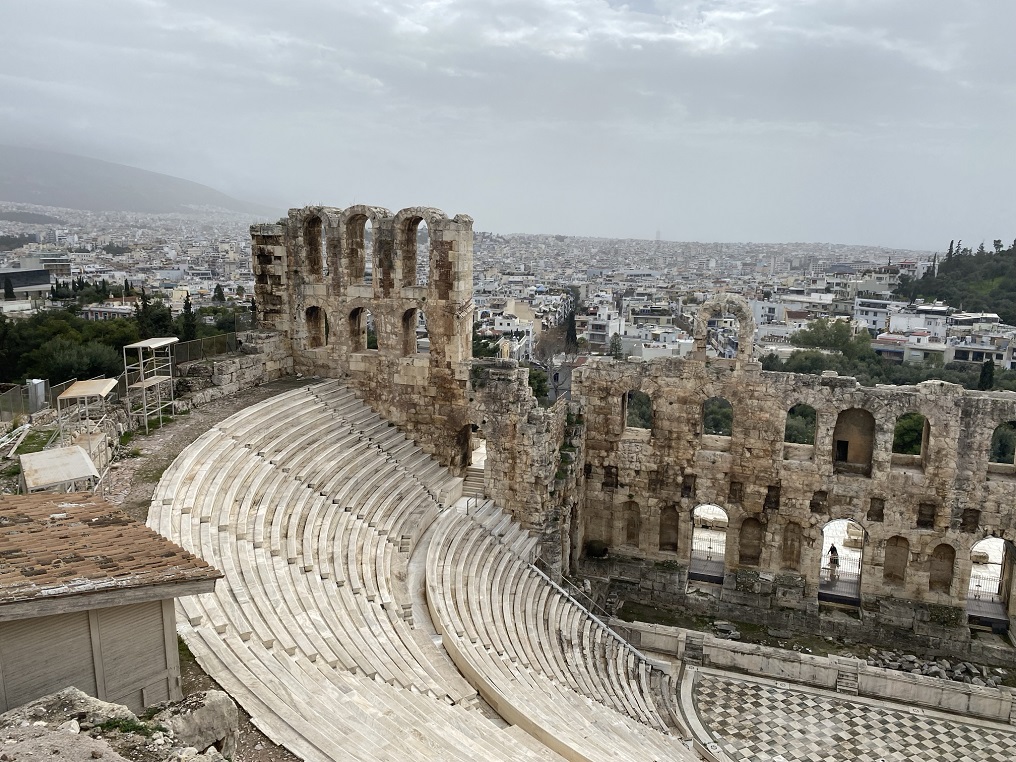
A monument to love and luxury
The theater was constructed in 161 CE by the wealthy Greek aristocrat Herodes Atticus, a prominent thinker and statesman of the Roman Empire. Built in memory of his wife, Regilla, this “Odeon”—a covered theater dedicated to musical performances—was placed at the foot of the Acropolis to become a permanent part of the sacred landscape.
In its prime, the Odeon was an architectural masterpiece.
Unlike typical open-air classical theaters, its stage and seating were covered by a massive roof made of precious cedar wood. It could accommodate approximately 5,000 spectators who gathered for concerts, literary recitals, and plays that formed the core of Greco-Roman cultural life.
Weathering the storms of history
History, however, was not always kind.
In the third century CE, the theater was devastated during Germanic invasions. It is important to note that these were not “Germans” in the modern sense, but ancient tribes from northern and central Europe, such as the Heruli and the Goths.
Around 267 CE, these tribes raided Athens, leaving the city—and the Odeon—in ruins.
For centuries, the theater remained a silent pile of rubble as Athens transitioned through Byzantine and Ottoman rule. It was not until the 1950s that the Odeon regained its life.
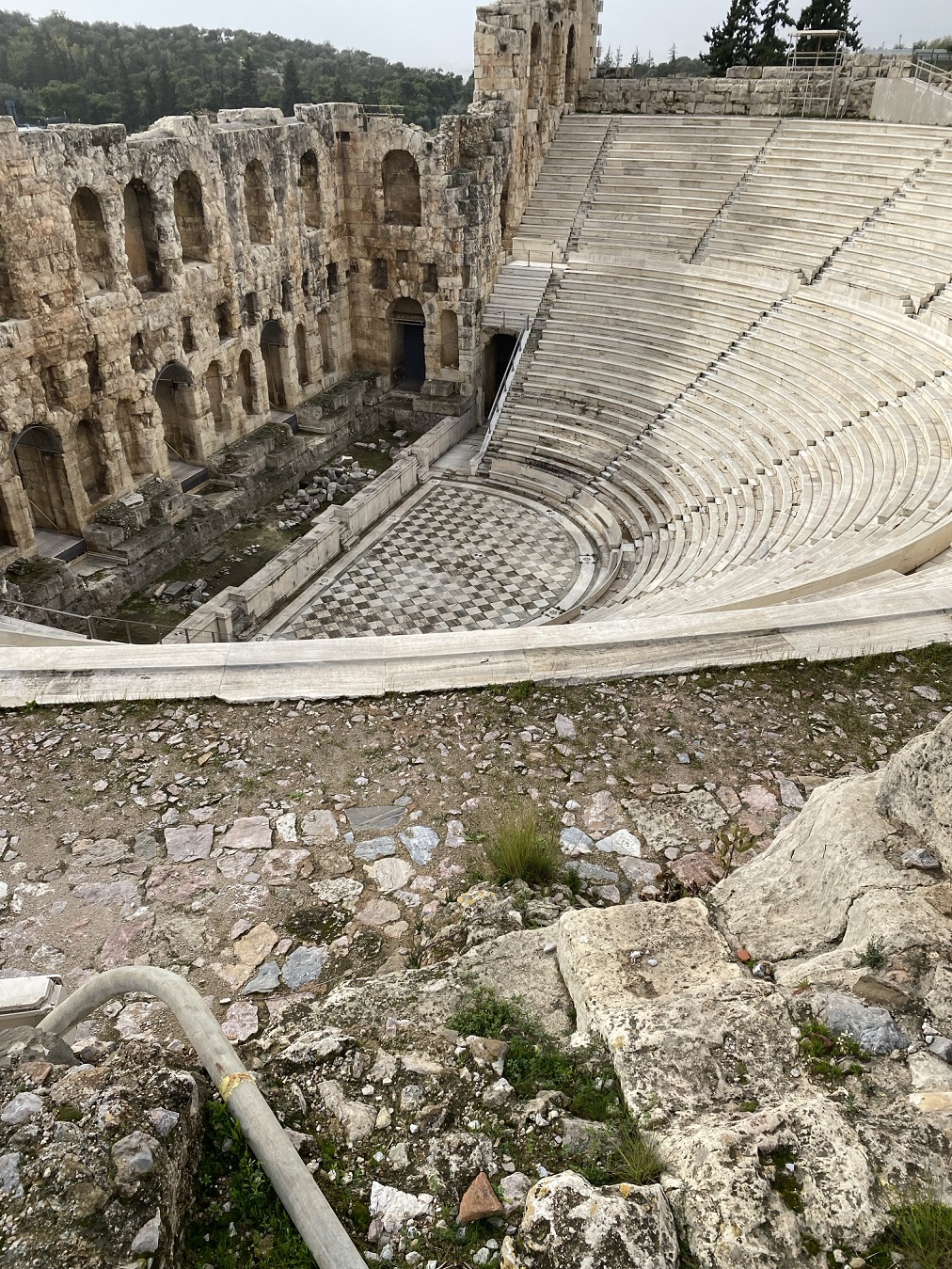
Greek authorities launched an extensive restoration project, utilizing original marble and stone wherever possible to return the structure to its former glory.
A global stage under the Acropolis
Today, sitting on stone seats polished by centuries of use, visitors witness a truly unique spectacle: a second-century stage backed by a massive Roman arched wall, sitting directly beneath the towering rocks and ancient temples of the Acropolis.
Every summer, the Odeon transforms into one of the world’s premier open-air venues, hosting the renowned Athens and Epidaurus Festival. Since its reopening in the 1950s, this stage has become one of Europe’s most prestigious platforms.
It has hosted legends such as:
- Maria Callas: The legendary Greek soprano who gave historic performances here in the 1950s.
- The Three Tenors: Luciano Pavarotti, José Carreras and Plácido Domingo.
- Greek Icons: Nana Mouskouri and Mikis Theodorakis.
- Modern Sensations: The famous 1993 concert by Yanni, titled Live at the Acropolis, which was broadcast globally and introduced millions to the magic of this historic venue.
Perfection in sound
Perhaps the most astonishing feature is the theater’s extraordinary acoustics.
The second-century engineering is so precise that sound travels clearly across the stone tiers; a spectator in the highest row can hear an actor on stage perfectly without the need for electronic amplification.
As the performances end and the crowds depart through ancient stone corridors, one is left with the feeling that the Odeon of Herodes Atticus is not merely a preserved relic.
Instead, it is truly a living, breathing theater that continues to fulfill its purpose even almost 2,000 years later—a global stage where the echoes of the past blend seamlessly with the music of the present.