The World Health Organization (WHO) on Sunday declared an Ebola outbreak in the Democratic Republic of Congo (DRC) and Uganda a “public health emergency of international concern.”
The latest epidemic is being driven by the Bundibugyo virus, one of several viruses known as Orthoebolaviruses that can cause Ebola disease, according to WHO.
The outbreak does not yet meet the criteria of a “pandemic emergency,” the organization said. But with a rising number of cases, more than 130 deaths thought to be linked to the outbreak, and no approved vaccine, fears are mounting over how effectively the spread can be contained.
On Monday, the US invoked a public health law to limit entry into the country from the affected region, just as one US national tested positive for the strain in the DRC.
Here’s what to know.
What is Ebola?
Ebola is a severe and often fatal disease that is spread through direct contact with the bodily fluids of an infected person, according to the Africa Centres for Disease Control and Prevention (Africa CDC).
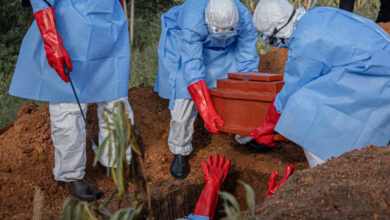
It can also be spread through contact with contaminated materials or a person who has died from the disease.
Symptoms often include fever, fatigue, muscle pain, headache and a sore throat, followed by vomiting, diarrhea and abdominal pain. Internal and external bleeding can occur later as the disease progresses.
There are six known virus species linked to Ebola, but only three cause most large outbreaks: Ebola virus, Sudan virus and Bundibugyo virus, the latter of which is behind the current epidemic, according to WHO.

How many people have tested positive?
As of Tuesday, there have been 131 deaths linked to the current outbreak, according to the DRC’s health minister, Dr. Samuel Roger Kamba, with more than 500 cases suspected.
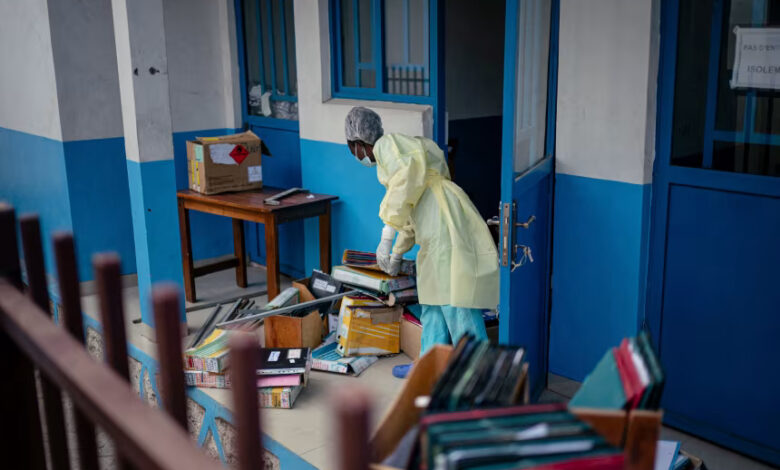
So far, 30 cases have been confirmed in the DRC’s remote northeastern Ituri province, WHO Director-General Dr. Tedros Adhanom Ghebreyesus said Tuesday.
At least one US national in the DRC – a Christian missionary physician named Dr. Peter Safford – has tested positive for the virus, the international charity Serge reported Monday. The CDC confirmed at a briefing that an American had tested positive but did not confirm the identity of the person.
US officials are working to move seven people from the Central African country to Germany, Capt. Satish K. Pillai, a doctor and incident manager for the CDC’s Ebola response, told reporters on Monday.
Elsewhere, in the eastern DRC city of Goma, at least one Ebola case has been identified, according to a spokesperson for the Rwanda-backed AFC/M23 rebel coalition, which seized the city last year in a rapid offensive.
In Uganda, two laboratory-confirmed cases, including one death, have been reported in the capital, Kampala, WHO reported. The two cases had no apparent link to each other, but the people had traveled from the DRC.
Uganda’s media office said Saturday that the body of a Congolese man who died in Kampala had been returned to the DRC. The other patient is being treated in hospital, a spokesperson said.
How deadly is the disease?
Ebola fatality rates have varied in past outbreaks from 25% to 90%, WHO said. The average death rate is about 50%.

The fatality rate involving the Bundibugyo strain is estimated to be between 25% and 40%, according to medical care organization Doctors Without Borders or Médecins Sans Frontières (MSF), which is preparing to scale up its response in Ituri province.
“The number of cases and deaths we are seeing in such a short timeframe, combined with the spread across several health zones and now across the border, is extremely concerning,” Trish Newport, MSF’s emergency program manager, said Saturday.
“In Ituri, many people already struggle to access health care and live with ongoing insecurity, making rapid action critical to prevent the outbreak from escalating further,” she said in a statement.
Last year, 45 people died in the DRC after an Ebola outbreak in a remote region of Kasai province, according to the CDC.
Ebola is extremely infectious but not extremely contagious. It is infectious because an infinitesimally small amount can cause illness. Laboratory experiments on nonhuman primates suggest that even a single virus may be enough to trigger a fatal infection. Ebola is considered moderately contagious because the virus is not transmitted through the air.
Is there a cure?
There are currently no approved treatments or vaccines specific to the Bundibugyo virus, according to health experts.
Has this happened before?
Yes. This is the third detected outbreak involving the Bundibugyo strain after outbreaks in Uganda between 2007 and 2008 and in the DRC in 2012, MSF said.
This is the 17th Ebola outbreak in the DRC since the first case was discovered in 1976, according to the group.
However, one resident in the DRC told CNN the current outbreak “seems even more deadly” than previous strains. Jean-Faustin Baraka urged health organizations to “find the most efficient means for quickly resolving this problem.”

What makes it a global health emergency?
In its assessment, WHO set out several reasons explaining why the outbreak has been classified as a public health emergency of international concern.
Notably, the number of deaths, laboratory-confirmed cases and suspected cases is growing. While the true scale of the epidemic is unknown, all signs point toward a “potentially much larger outbreak than what is currently being detected and reported.”
Another key concern is how the disease could spread to other countries, with nations that share a border with the DRC considered at “high risk for further spread.”
Years of war, mass displacement and aid cuts have “deepened a humanitarian crisis of staggering scale” in the DRC, according to Dr. Manenji Mangudu, the country director for the international NGO, Oxfam. “Those same aid cuts left DRC effectively blind to Ebola, weakening the surveillance systems that should have detected this outbreak weeks earlier,” he added.
What is being done to contain the epidemic?
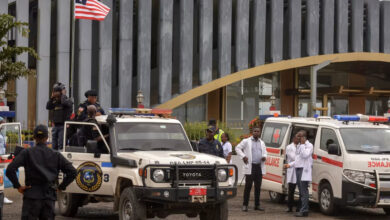
On Monday, the US CDC triggered Title 42 – public health law that restricts entry into the US during outbreaks of communicable diseases – for at least 30 days, after deploying resources from its offices in Uganda and the DRC to bolster containment efforts.
The agency announced a suite of measures to “protect the health and safety of the American public,” including enhancing screenings for those arriving from affected regions and placing restrictions on non-US passport holders if they have traveled to Uganda, the DRC or South Sudan in the past three weeks.
Officials assessed the immediate risk to the US public as “low” but added that they would track the “evolving situation” in a statement Monday.

Meanwhile, international coordination is being ramped up, aimed at preventing the epidemic’s spread, with Ghebreyesus praising the DRC and Uganda for their “frankness” in determining the risk posed to other nations.
Tedros plans to convene an emergency committee “as soon as possible” to address the situation and discuss how nations should respond, according to WHO.
The European Union said Monday that it has personal protective equipment (PPE) stockpiles ready to be deployed and is supporting Africa CDC by providing detection kits, a European Commission spokesperson told CNN.
CNN’s Larry Madowo, James Frater and Caitlin Danaher contributed reporting.