Cuba is struggling with devastating nationwide blackouts as the United States’ effective oil blockade strangles fuel supplies. But this crisis may also be accelerating a China-backed clean energy revolution that’s been quietly unfolding in the Caribbean nation.
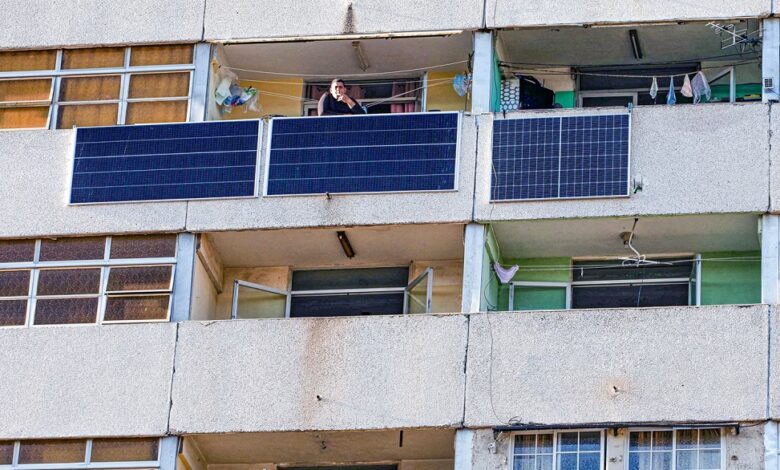
Cuba is currently pulling off one of the fastest solar revolutions on the planet, with help from China, according to data from the energy think tank Ember. Imports of Chinese solar panels and batteries have soared over the past year and, with Chinese investment, Cuba has built dozens of solar parks.
The country is still heavily dependent on fossil fuels, but some experts believe the intense US pressure — with threats to take “control” of the island — may hasten Cuba’s path toward clean energy. More renewables mean less dependence on fuel imports, helping “remove this lever of coercion,” said Kevin Cashman, an economist with the Transition Security Project, a US-UK research organization.
Others caution that Cuba’s energy situation is so bleak, its grid so broken and its economic situation so dire, that renewables can only be a small part of the puzzle right now. In the meantime, lengthy and disruptive blackouts continue and most ordinary Cubans have yet to feel the benefit of the solar surge.
A clean energy revolution “sounds nice on paper, but you’ve got to have the resources,” said Ricardo Torres, a Cuban economist at the American University in Washington DC.
Oil is the backbone of Cuba’s electricity system and most of it is imported. In the 1980s, it came mainly from the Soviet Union. When that fell in the 1990s, Cuba switched to Venezuela, with a unique agreement where Cuba sent medical professionals to Venezuela in exchange for oil.
In early January, after the Trump administration captured Venezuela’s president, it cut off this oil supply. Shortly after, imports to Cuba from other oil suppliers, including Mexico, also dried up after the US threatened them with additional tariffs.
The impacts have been devastating. In March, the country experienced three nationwide blackouts, cutting electricity for its roughly 10 million residents. Trash piled up in the streets, hospital surgeries were limited and people burned wood to cook.

It is Cuba’s worst energy crisis in decades, but blackouts have been part of daily life for many years, as the country’s aging electricity infrastructure frequently buckles under the weight of a demand it cannot meet.
The crisis reached new levels in 2024, with multiday nationwide blackouts. It marked a “turning point,” Torres said, and was the year solar started to take off, promoted by the Cuban government as a solution to energy problems.
The speed of the solar surge has been startling. China exported around $3 million of solar panels to Cuba in 2023; that figure rocketed to $117 million in 2025, according to Ember.
A big part of the country’s clean energy push is an agreement with China to open 92 solar parks across the country by 2028, projected to bring a total of 2 gigawatts of solar power online, enough to power more than 1.5 million homes.
Cuban President Miguel Diaz-Canel opened the first in February 2025 and there are now around 50 online, dotted across the island. Cuba has installed around 1 gigawatt of solar in the last 12 months alone, Graham said, “that does actually make a pretty meaningful dent in the in the power mix of a country the size of Cuba.”
Renewable energy now makes up roughly 10% of Cuba’s electricity, up from around 3% in 2024. “It’s a really, really rapid boom,” Graham said. The country has pledged that figure will rise to at least 24% by 2030.

The benefits of solar for Cuba are clear. Costs of clean technology have plummeted in recent years and solar is relatively fast to install, Graham said. The infrastructure lasts decades and, once set up, needs only sunshine.
There’s a benefit for China, too, which goes beyond financial, said Jorge Piñon, a senior research collaborator at the University of Texas’s Energy Institute. It will “build goodwill, not only goodwill within Cuba but goodwill with the rest of Latin America,” Piñon said.
Experts warn there are big hurdles to a broader solar revolution, however.
The surge may be rapid but solar power is not yet available at scale. Cuba’s solar parks are small and scattered, Piñon said. Solar power is also only generated when the sun shines, meaning it cannot meet peak evening demand. Batteries can solve this, and battery imports have soared, but Cuba still lacks utility scale storage, Piñon said.
Perhaps the biggest issue, however, is cost. A solar revolution won’t come cheap. “You’re talking about a major overhaul of a system that is old, is broken, is tired,” Piñon said.
It would cost $8 billion for Cuba to generate around 93% of its electricity from renewables, meaning it would no longer need to import oil and gas for electricity, according to an April analysis by Cashman. A 100% renewable electricity system would cost $19 billion. “The first threshold breaks the main external lever of US coercion; the second completes the electricity transition,” the report concluded.
The billion-dollar question is who pays for it. “You have the state that’s broke, doesn’t have any money. You have the Cuban consumer that can’t afford it. So who’s left?” Piñon asked.
Cashman’s report suggests development finance institutions will be key. But Cuba would need to show it could pay back loans and this will take time, Piñon said, “which Cuba does not have.”
There are limits to China’s support, too. It’s unlikely to offer Cuba a “blank check,” Torres said. Energy independence would be great, he added, but Cuba “is a poor country in the middle of an economic crisis.”

For some Cubans the solar surge is already yielding benefits. At the country’s first solar-powered charging station in the city of Santa Clara, Cubans can charge anything from cellphones and power banks to electric motorbikes.
“They have solved many problems for many people,” said Yudelaimys Barrero Muñoz, in an interview with the Associated Press. She uses the station to charge her family’s electric three-wheeler.
Yet for most, the advantages are not yet visible, Torres said. He has bought small solar modules for family in Cuba, but solar is out of reach for the majority who struggle even to afford food.
If you ask the average Cuban if they have seen any benefit of the solar program in their daily lives, Torres said, “the likely answer is going to be no … Because the blackouts are now worse than they were a year ago.”
He believes renewable energy must play a role in the country’s electricity mix. But what Cuba needs isn’t just cleaner electricity, but more of it and fast, he said. People need guaranteed supply and it doesn’t matter to them whether it comes from the heaviest, most polluting oil or from solar, he added.
Others, however, see a more positive road ahead for the rapid deployment of renewables not only in Cuba, but also elsewhere, as the costs of clean tech continue to fall and geopolitical turbulence lays bare the perils of relying on fossil fuel imports.
“No matter what happens to Cuba,” Cashman said, “this is a clear signal to other countries that renewables are something that they need to focus on.”